Returning (with a memory)…

It is a sad (for me) testimony to my limited fidelity to art and art making that I seem to return to this blog every two years or so. So here I am again.

I was blessed with Franklyn’s mentoring — and soon, his friendship. I had been the faithful teacher for so many — and now, someone took an interest in me: in my talents, in my dreams, in my hopes and the trepidation that I had in trying to realize them.

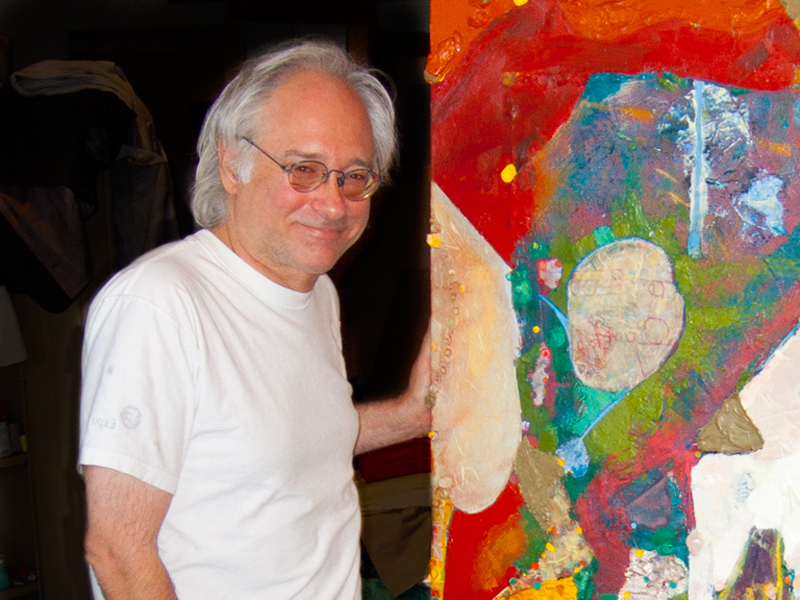
I was broken hearted to find out that Franklyn died, quite unexpectedly, on February 29, 2012. He was a muse, an alchemist, a searcher…and a friend.

A Review of a memorial show in his honor, written by Margarita Nieto in the Visual Art Source described Franklyn:

Los Angeles artist-teacher-mentor Franklyn Liegel passed away suddenly on February 29th of last year. A prominent member of the downtown artist community, this memorial exhibition draws not only from Liegel’s body of work, but from a number of fellow artists in a tribute to his active presence here. It also opens up the enormous space his absence creates. His passing elicited an immediate outpouring of grief from former students and friends that was expressed previously in the June, 2012, “Franklyn Calm, Franklyn Excited, Franklyn Artist” at AndrewShire Gallery. The artist’s unfinished works, based on the bits and pieces of things found in his studio, were distributed to his students and friends after his passing so those who knew and loved him might continue creating the abstract collage and two-dimensional assemblage works inspired by the late artist.

Liegel taught at Otis, Art Center, USC, the Crossroads School, the Los Angeles County High School for the Arts, and at the New School for Social Research in New York, which presented him with the first annual award for Teaching Excellence in 1988. A dedicated following took his courses term after term and year after year. This exhibition places his contributions as an innovative abstract artist alongside his achievement as a generous teacher.

A generous teacher. That is how I dearly remember him. I miss him. And I need his spirit to nudge me out of myself and back to the Studio.

A Year of Growth

A year later, and I’m back again. 2018 now. Nearly 20 years ago, I was lovingly ensconced in my life as a teacher at Loyola High School. On the outside, everything was beyond wonderful: I was devotedly and happily teaching my sophomores and seniors, painting sets in Hannon Theater, serving as chaplain for several teams — and unbeknownst to anyone — including, it turns out, myself — slowly dying inside. Popular and esteemed, I found myself giving what I no longer had or held: my very self.

So. I went back to school. It was my beloved friend and mentor, Fr. Tom McCormick, S.J., who one late night after hearing dozens of confessions on a Kairos retreat, said something to my heart that stirred my spirit. It was the Holy Spirit speaking through the puffs of his cigarette, “You should go get a degree in art.”

So I did. But first I had work to do. I had no portfolio with which to apply to schools. I didn’t even know what M.F.A. programs wanted. Or if they would be interested in who was then a 40-something good-at-painting-high-school- sets but otherwise uncertain if he could shed the seductive attachments of Room 901 to be something more…me.

With the support of my Jesuit community, I set sail to find a different me. Or better, parts of me that were lost. That quick watercolor based on the Prodigal Son touched something deep. My empty husks were adulation and ovations. And loves that were not love. Yes, it involved going to a gym, losing nearly 40 pounds (all back and more…the journey never ends) and finding friends who were old enough to vote.

I found non-degree classes at Otis College of Art and Design, Art Center in Pasadena and UCLA. But most of all, I found my first mentor and friend, Franklyn Liegel. A painting class at Otis. It began embarrassingly. Do a pencil sketch. I didn’t have a pencil. And didn’t know how to ask for one. So I did a drawing in paint. “Curious,” Franklyn said. And thus began a wonderful friendship. Screen Shot 2018-05-24 at 3.07.15 PM2012-03-21-franklynI studied with Franklyn at both Otis and Art Center. He was serious about art-making…and he took me seriously as an artist.

Franklyn encouraged me to experiment with materials. One of the first paintings that I completed used images from the Book of Kells, spilled enamel paint, bits of magazine photos cut into pieces, a couple of different kinds of acrylic gels, pieces of Irish linen, a torn piece of a watercolor — and a 6th grade religion project. 1072400_1673044406253430_4924643508983416091_oFranklyn walked by as I was just about to add something else to this collection of materials — and almost yelled at me to “stop.” It has been a forever problem for me to know when and how to stop painting a painting. I’ve ruined more than a few paintings by overworking them. It’s something about the 6th grade homework assignment: “I worked, I worked, I worked…” Sometimes you just have to stop. A good teacher saved this painting for me.

Then another assignment. Collage something onto/into the painting. (A future teacher at Pratt would find that suggestion abhorrent, I would later discover…) For years, I painted sets in Hannon Theater at Loyola High. For years. The only painting I did was then and there. And not fully mine. Over the years, I collected dozens of paint can lids — all sorts of different colors. So I decided to take a few of them and “repurpose” them. Bring them into my world. My paintings. My life. Now.

The first was a landscape of Celtic megaliths. Big Irish rocks. Out in the open. Out in the weather. Out in the world. Like I was just starting to be. celtic paint can lids 2And then another — less successful attempt. Hey, why not throw a stick onto the canvas?untitled 6 1998Oh yeah, and a page from the Bible.

…my Lord, it’s been 20 years and I’m still trying to find my voice.

How about some Pita Bread?

So, the painting that I made using the lids from cans of paint led me to another idea. I liked the notion of gluing things to the canvas (I would later encounter a professor at Pratt who considered such behavior something of a mortal sin, but that’s a few years away.) I liked the round shape of the paint can lids, but found it too, well, round. And perfect. And mechanical. So — and I don’t remember why — I started to use Pita Bread. I let the bread harden in the air, then covered it with acrylic medium, which (sort of) sealed it. Then I experimented with all sorts of techniques, colors and materials to make a collection of “pita” figures. They all had something of a figurative quality. Like faces.
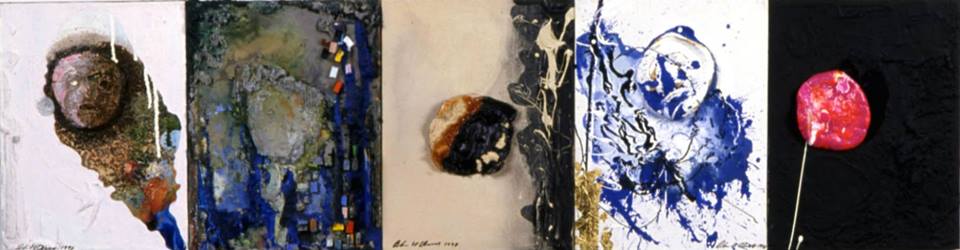
1098433_1391911171033423_1425359705_nI eventually combined these canvases into a collection of five, but originally they were individual paintings. The first one, pita bread with acrylic paint, gloss medium and coffee grounds. Franklyn had me use a pinkish white to edit down the form; the second used heavy texture medium and little ceramic tiles I bought years ago in Ravenna, Italy; the third some sort of heavy goop driveway sealant (why not?) and the last two gesso — always gesso and paint (with a touch of gold foil.)996560_1391911324366741_1697505307_nMore and more of the same. I was having fun playing with materials. The second one above used some napkins that had soaked up some of the paint I was experimenting with…why not make them part of the painting?

There were about 5 or 6 more of these paintings, I began to lose them when I moved to New York for grad school. Mice found them in my studio. And, well pita bread is bread.

blackpitaPita bread with a mixing stick and some eucalyptus acorns.

green pitaIn the lower left of this painting, I was using an electric sander to remove some build-up of paint: I burned through the canvas. I liked it.

When I eventually got to Pratt, one of my first professors, Jerry Hayes, a gentle and kind man, looked at these paintings and asked me, “Has Ross Neher seen your work?” I was taking Ross for a drawing class at the time — my first semester. I said, “No, why?” Jerry said, “Oh, he would hate them.”

I wanted to know why. So I took Ross the next semester for a painting seminar. Turned out he did hate these paintings. And then went on to unlock a door for me. But that’s a bit later in my story.

Genesis One

Six days of Creation. God creates. God works: Separates, divides, gathers, adds — order drawn from chaos.

One day. It’s good. After another. It’s good. And another. It’s good. And still good. The Artist at work. The Creator creating. Steps back. Sees what’s happening on the canvas — or the cosmos — and likes it. And goes back to work. Because that’s what Creators do. What they must do.

The Deity: All-powerful; Omniscient; Omnipotent; Eternal; Infinite; Wisdom; Mystery; Awesome; Perfect; Mighty; Ancient of Days; Sovereign…yes, yes, yes and yes. But in this tale, God’s just an Artist at work.

Me too. Just a bit…in a studio more messy and muddled.

We human critters create because we must — image and likeness and all that. I do it the only way that I can. The only way I know how. The way God made me.

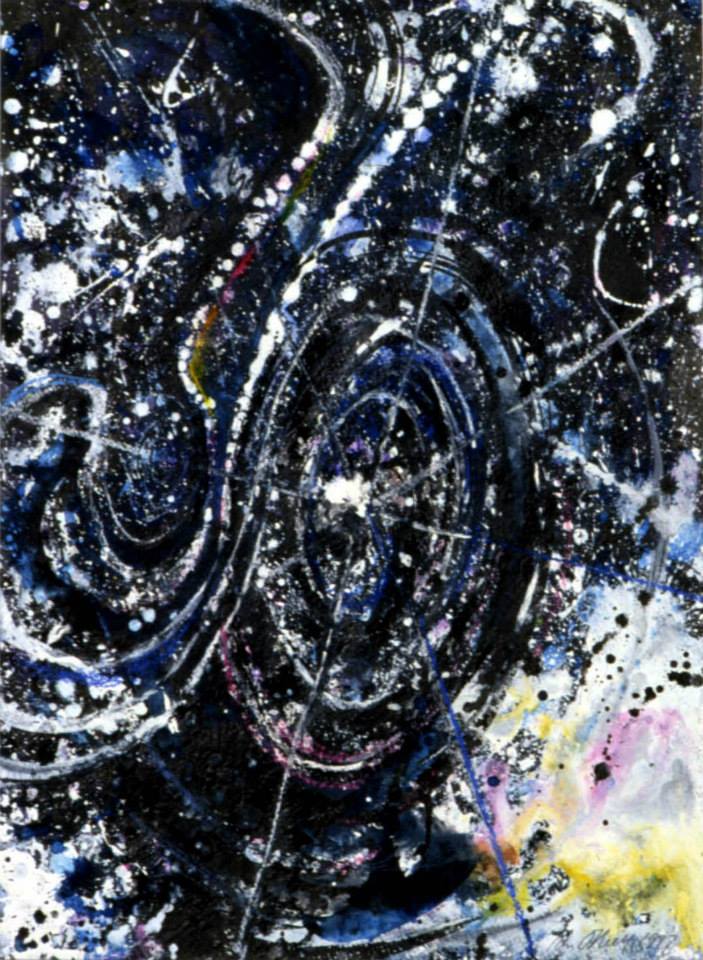
In 1997,  I began this series on the first chapter of Genesis. I did about 5 or 6 pieces using watercolor, prismacolor pencils, ink and gesso…always gesso. These paintings are almost 20 years old now — and I never got beyond the one with green-growing things (I never finished that one.) And I never got to Tom McCormick’s anticipated favorite of them all, “creeping things” — as he’d say between slugs of coffee and puffs of smoke, “crepitandibus!”

I’ve long felt the desire to return to this subject matter. Matter. And Grace.

And, for Tom, Crepitandibus. Stay tuned.

separation of light and darkness

Separation: Light and Darkness

1003027_1391909881033552_1007882900_n

“Let there be light”

creation 4

The waters above and waters below

creation 7

Land and sea

Creation 5 1997

Earth

Fall 1996; a Prodigal Son

In the fall of 1996, I made an 8-day retreat with Fr. Jim Hanley, S.J. at El Retiro in Los Altos. Actually, my superior at the time, Fr. Dick Cobb, S.J. set the retreat up for me. He wisely perceived long before I did that the “every sophomore’s favorite Jesuit” was slowly falling apart inside. I had not made a good, prayerful retreat in a several years (too busy being “beloved and popular” to root myself in Love.)

Anyway, on the retreat, Jim gave me Henri Nouwen’s little book on Rembrandt’s painting of the Prodigal Son. I never finished it, but I did get a little lost in the story. Stumbling upon word after word. And, using a set of watercolors that I brought with me, I started to paint. Not sets. Not backdrops. Just simple, little watercolors. That were mine.
I ended up doing about 20 quick “sketches in paint.” This is one of them. Over the next few years, I thought a lot about that black dot. Somehow it was me. Wanting more. Wanting color. Wanting Out.

It takes time. And grace.1846397

my watercolor self? copy

9/11/96 Shame/Relief ???          (self)

Loyola High School

I love Loyola High. Twice in my life I was blessed to be assigned to work at 1901 Venice Boulevard in Los Angeles. The first time was for Regency from 1983 to 1986 and then for my first assignment as a priest, from 1990 until 2000.

During those years, the only painting that I did was for the sets in Hannon Theater and several large backdrops for Liturgies in Xavier Center.

I always promised my directors, Chuck Tilley, S.J. and Walt Wolfe, that the sets would be finished before the curtain rose on opening night — they might still be wet, but they’d be done. I loved the years in Hannon working with so many talented students — many more gifted than I. It turned out that painting all of those sets was great preparation for my later graduate studies: working on that large a scale (Hannon is a huge space) really helped me to work large and free. Never mind that after I left Loyola, kids would find paint brushes in sealed cans of paint.

The backdrops were (are) special to me. It’s nice to return to Loyola and see these old friends still in use at school Liturgies.

491_1024.ts1063559364000 copy 2

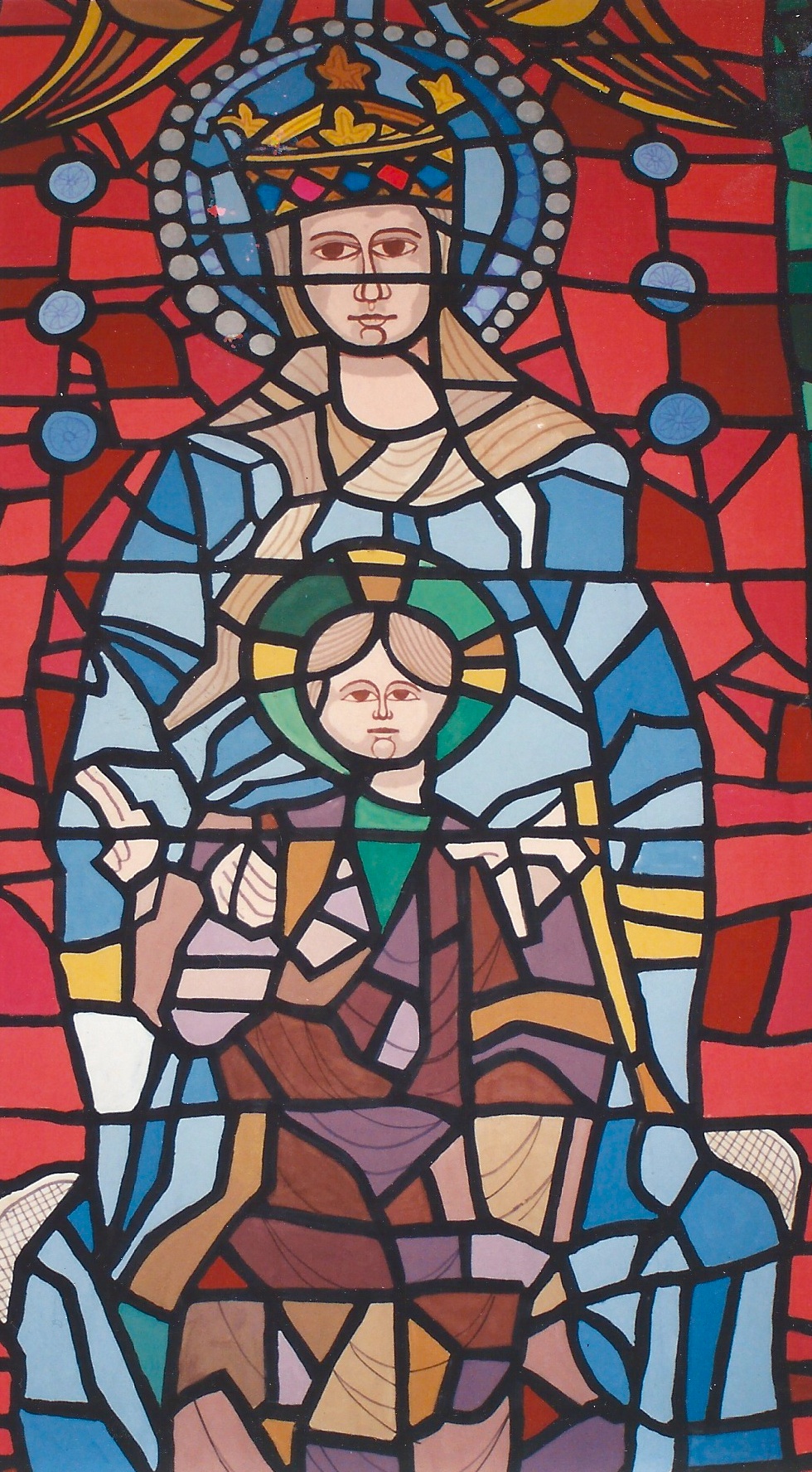
St. Ignatius Loyola: copied from the window in Clougherty Chapel

loyola high ignatius detail

The beautiful detail work in red below the IHS was done by my dear friend Patrick Sheedy, then a junior at Loyola

Loyola Chartres 1995

Loyola’s Chartres 1995

16996201_839440472882_3729964927933568060_n

The Four Evangelist Symbols from the Book of Kells

san tomas

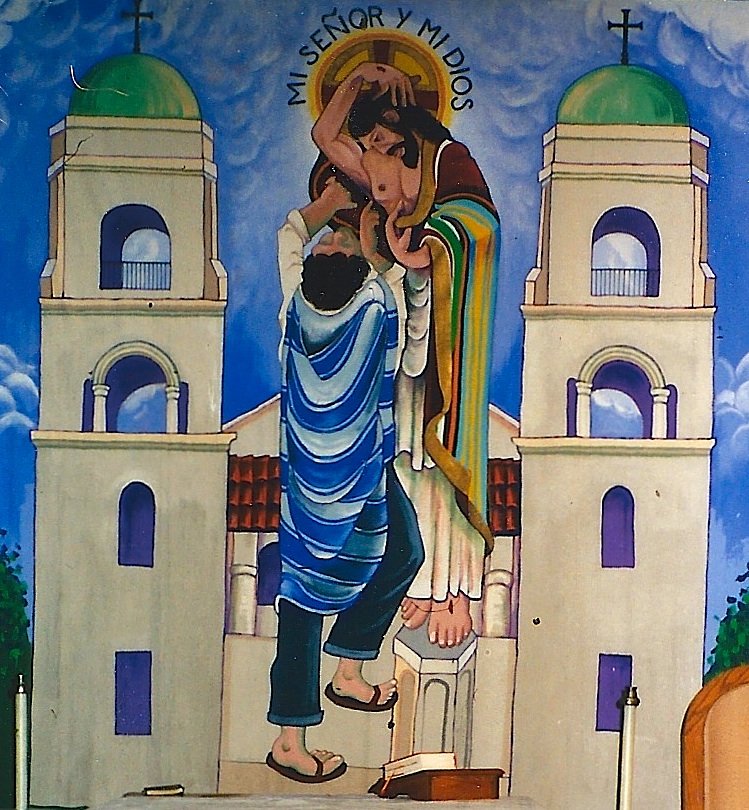
Santo Tomas 1999: When, because of a fire in their church,  our neighbors at St. Thomas the Apostle were using an undeveloped warehouse on Loyola’s property for their services, I painted this backdrop for them. It has a very special meaning for me. The colors on the robe of Jesus I copied from a watercolor that had been done years before by my dear friend Mark Toohey, S.J. Mark died just a few months before I began painting this drop. He loved the people of Santo Tomas so much: this was done in his memory. And in my grief.

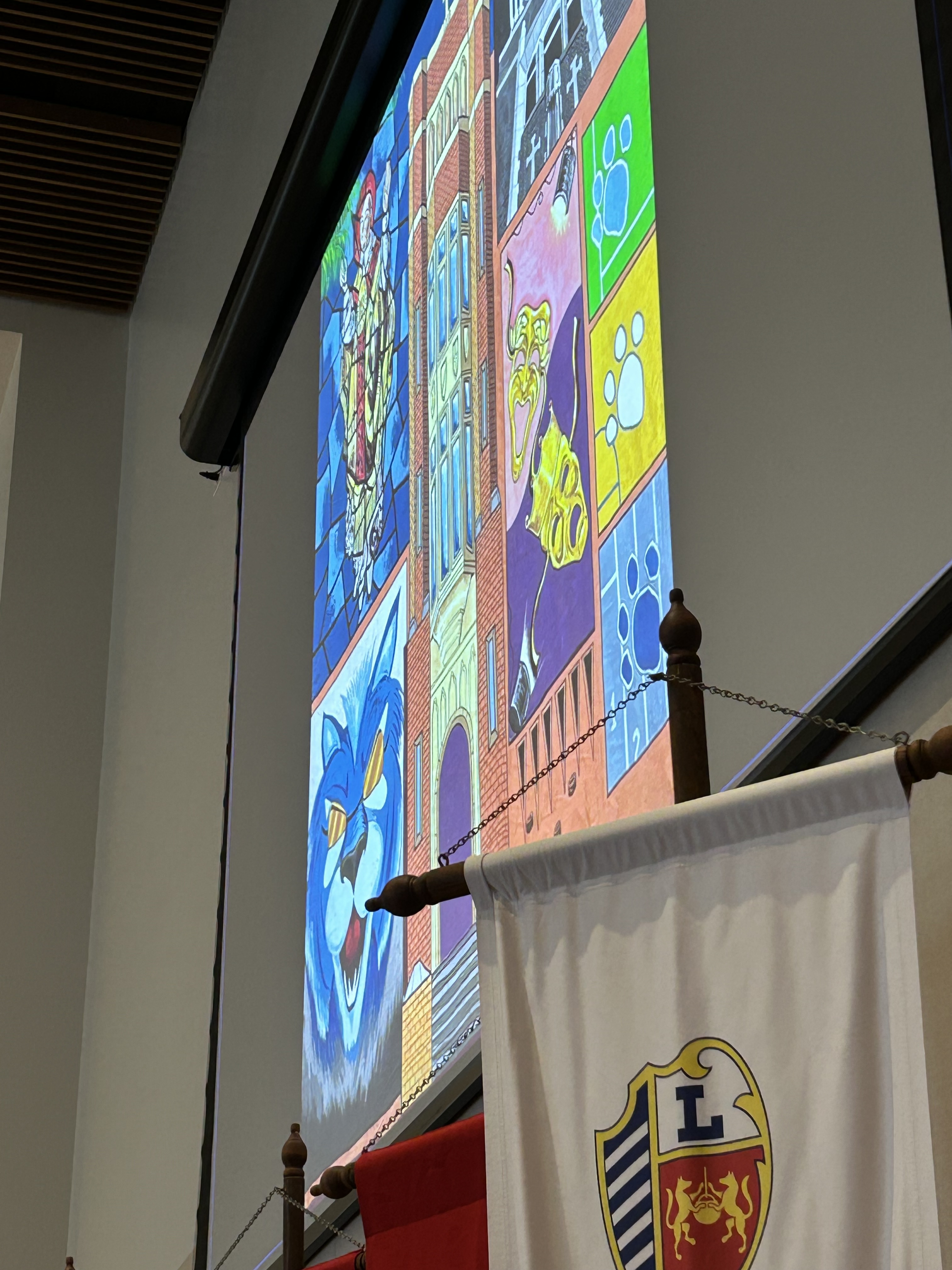
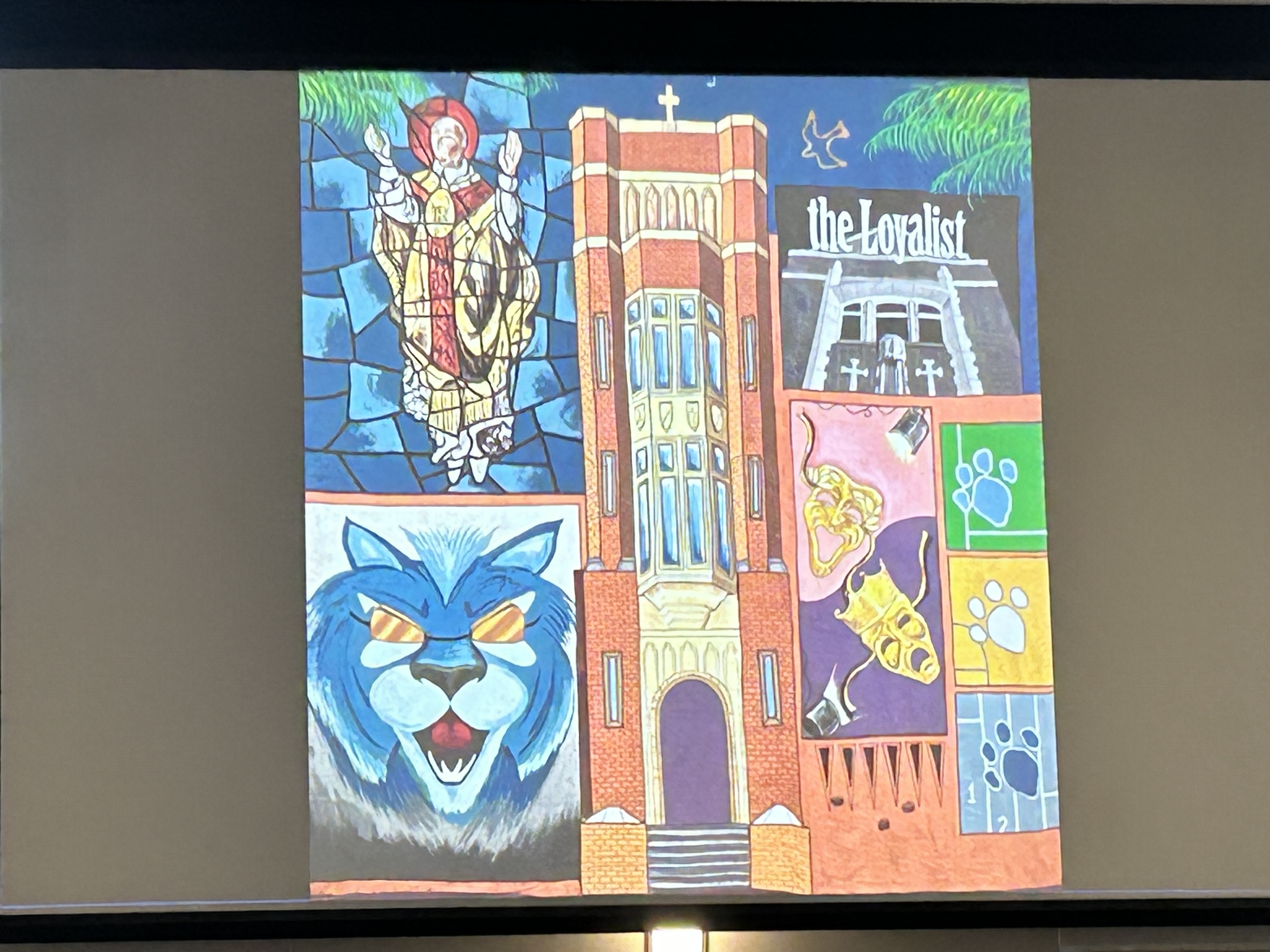
Update 2023: Returning to Loyola High after eight years in Sacramento, I discovered that my banners were digitalized and are now projected on screens for Liturgies. I took some photos of the Graduation Banner that I designed and painted for the Class of 1994.

Long Retreat project; Fall 1976

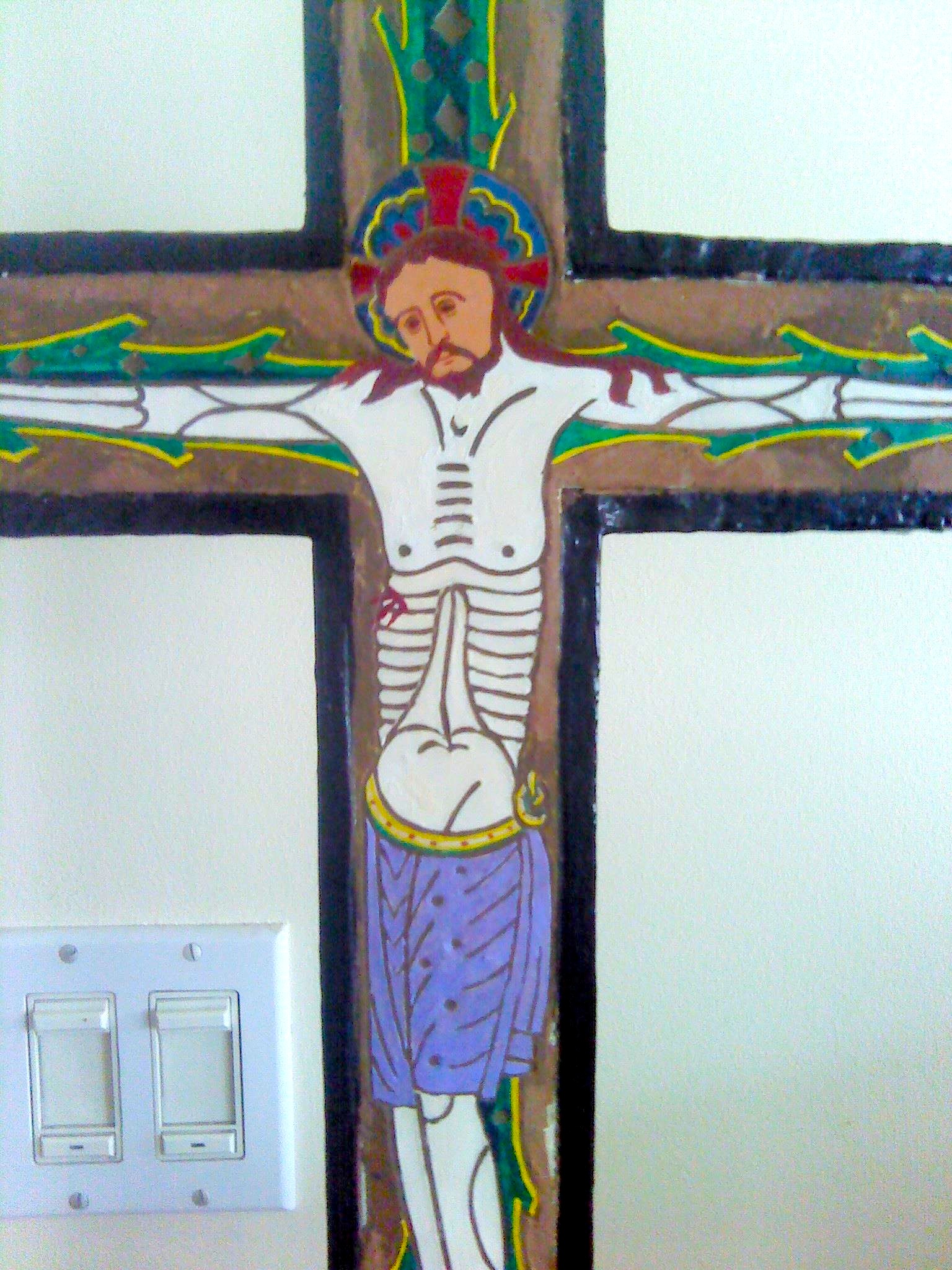
In my first year in the Novitiate, I made this crucifix during the Long Retreat — the 30 day long Spiritual Exercises of St. Ignatius Loyola. I cut out the cross shape from a piece of plywood, carved out the interior cross and filled it with some sort of polymer clay material. I sculpted and engraved the figure with a knife and then painted it with acrylic. (I copied a medieval enamel crucifix which I saw a few years later at the Metropolitan Museum of Art in New York.)

The corpus of Jesus is bone white — all of the color has receded into the bright green of the vine — the living wood of the Cross. (Not my idea — it’s the wisdom and insight of some nameless medieval artist.)

When I left the Novitiate, this crucifix remained in the Regis Chapel in the Novice building. Years later, when the Novitiate moved to Culver City, I figured that this piece had disappeared during the move. But some 30 years later, I happened to visit the (new) Novitiate in Culver City, and there, in a parlor was my old friend. Even more touching than this discovery was hearing a scholastic with whom I had become friends tell me that he had used my crucifix during his own Long Retreat.

I’m happy that this little vestige of my own spiritual beginnings still has a home in the Novitiate. AMDG

IMG_0272long retreat 1976

A year at Loyola Marymount


nyc subway 1983

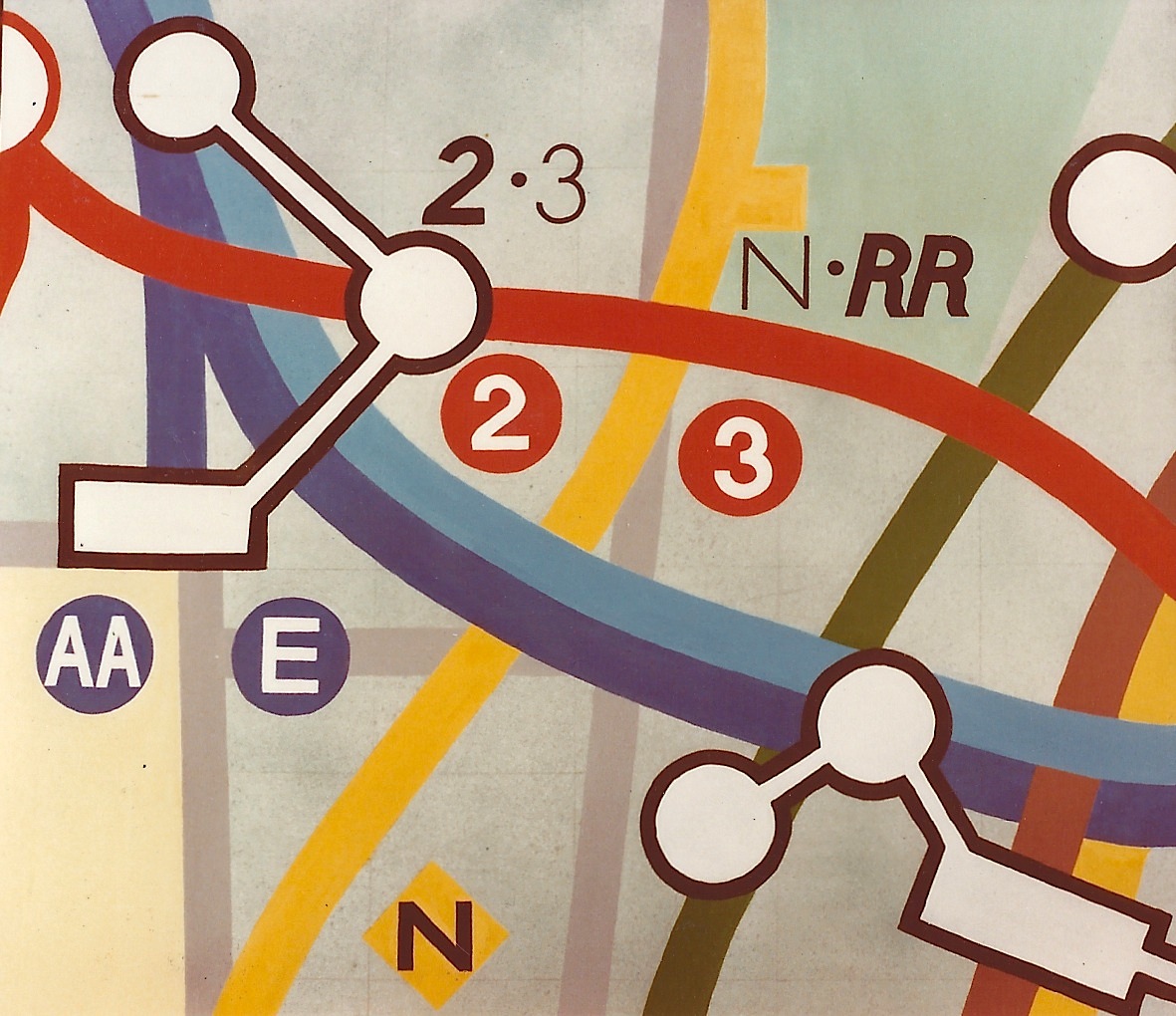
The assignment was to make a painting using “hard edges” — I believe this is a one inch square of the New York City Subway map

subway

The assignment on this painting was to use spray paint. I also collaged a newspaper and subway map. Fr. Don Merrifield, S.J., then the president of Loyola Marymount liked this painting, so I gave it to him.

IMG_0683

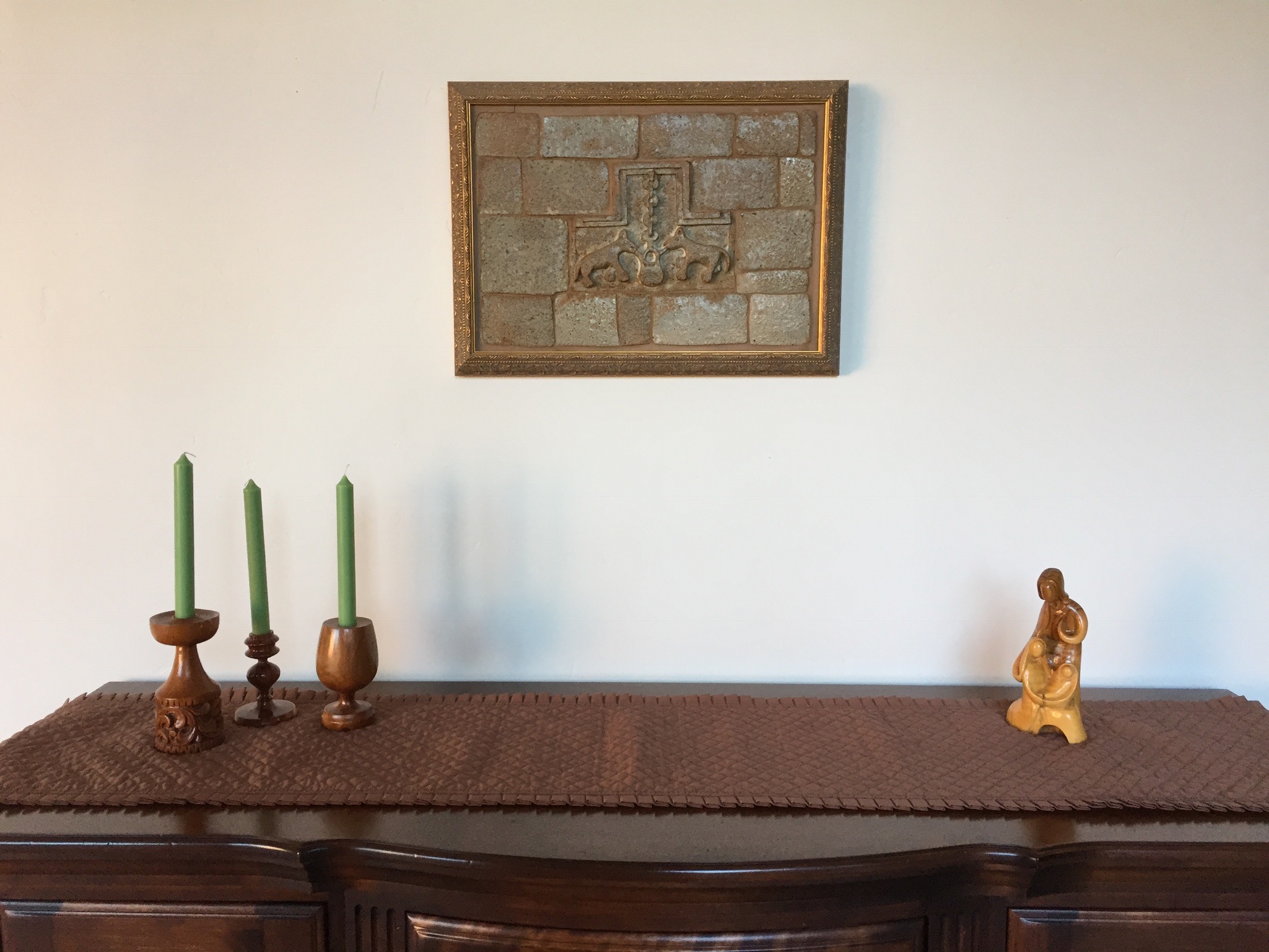
The Loyola family crest: wolves and kettle. I copied the stone relief sculpture from castle Loyola in ceramic.

IMG_0684

I gave this piece to Tom McCormick when he became rector at the University of San Francisco. It stayed there ever since — including the four years that I lived there. Earlier this year, I decided that I wanted to retrieve it — so I asked the superior there if I could get it back. He kindly agreed and it has now found a home here in Sacramento.


IMG_0679

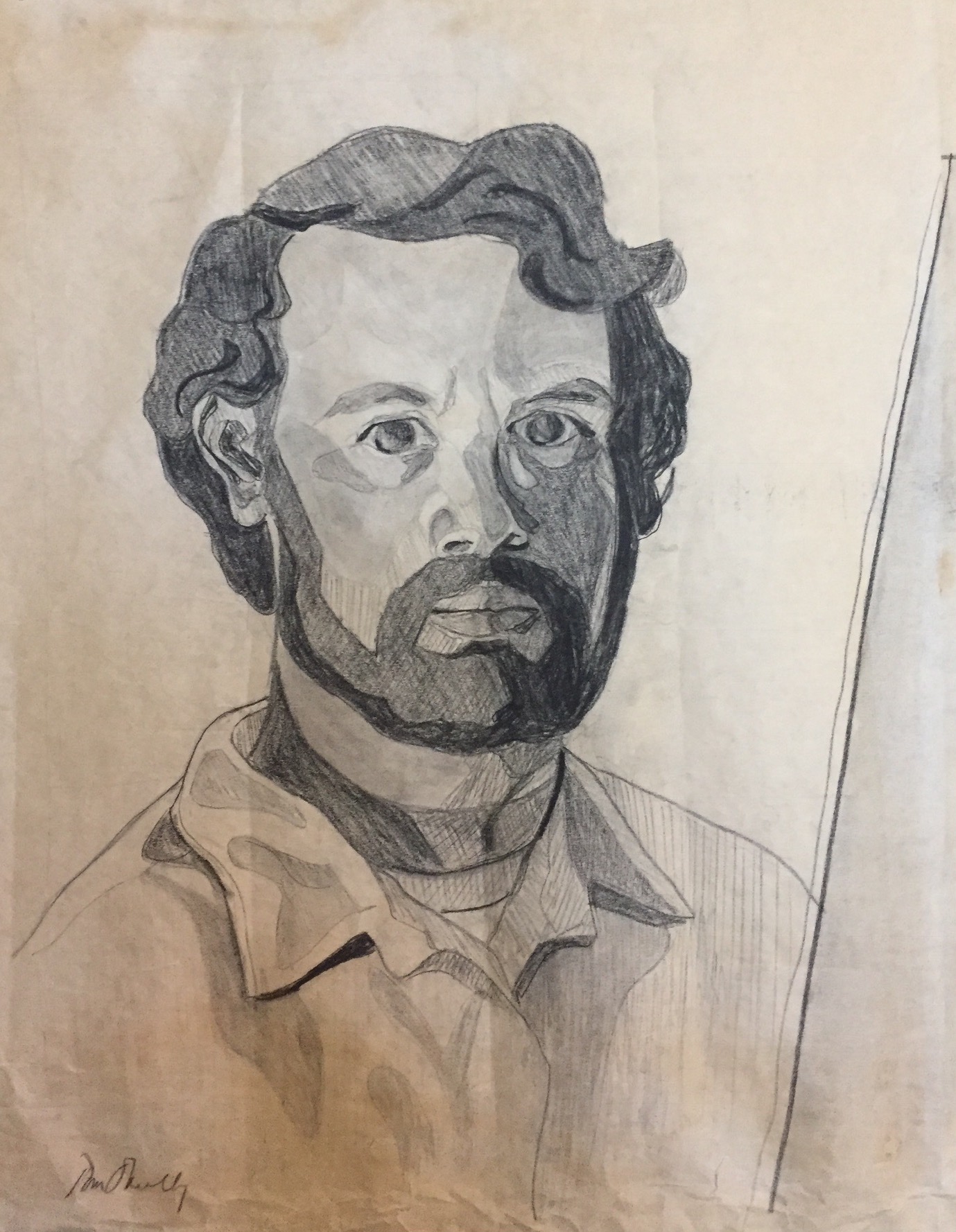
Portrait of the Artist as a (very) young man

After two years in New York City, I returned to California in the summer of 1982. Ordinarily, my next step in Jesuit formation would have been to begin teaching in a high school. Tom McCormick (there’s that angel again) agreed that my interest in art was important so he allowed (encouraged really) me to take a year and complete an undergraduate degree in Fine Art at L.M.U. I had earlier graduated with a bachelors in History there, so I all had to do was complete the classwork for the major.

So I lived for a year at Xavier Hall, the wonderful Jesuit community at L.M.U. taking courses in a number of areas, painting, sculpture, ceramics and art history. I’ve only managed to keep a few photographs of the work that I did during that year.

The first time in New York City

As part of my Jesuit formation, I spent two years (1980 – 1982) at Fordham University studying philosophy — well, I was supposed to be studying philosophy. I was initially enrolled in a program which would have earned me the coveted and elusive, “Masters in Humanity” degree. Well, it turned out the “MaHum” was really two-year degree in Thomastic philosophy — so I dropped out of the masters program, and with some undergraduate units in philosophy from earlier studies at L.M.U., I was able to complete the Society’s requirements in a year and a half.

That gave me a whole semester in New York City with “nothing to do.” Enter one of the angels of my life:  Tom McCormick, S.J. Tom had been on the Novitiate staff when I was there and had been my superior at Sullivan Hall at L.M.U. Now he was in charge of all the California Jesuits in formation. He gave me permission to drop the masters in philosophy — and then encouraged me to use that last semester in New York to find some art classes. (It wouldn’t be the last time he did that.)

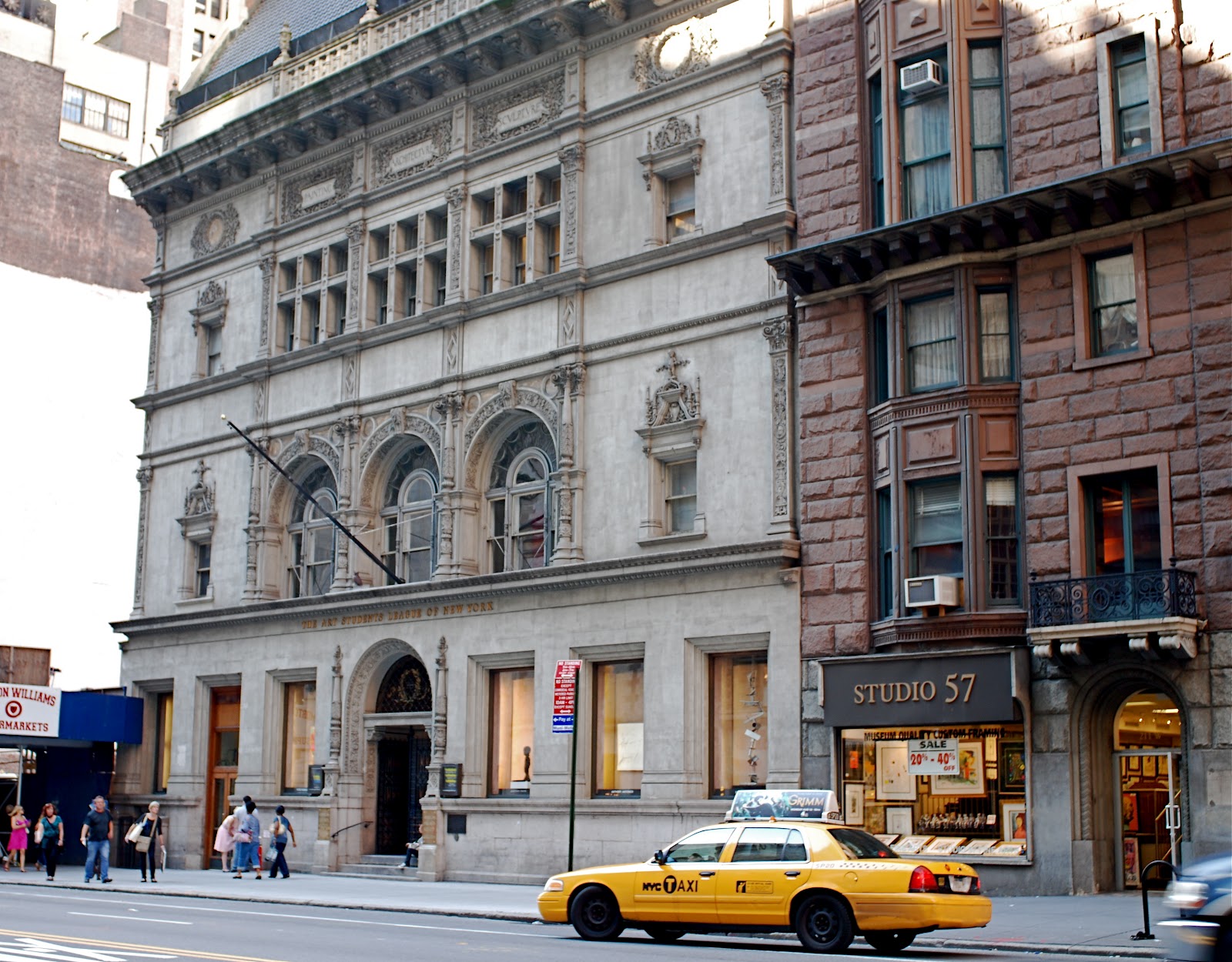
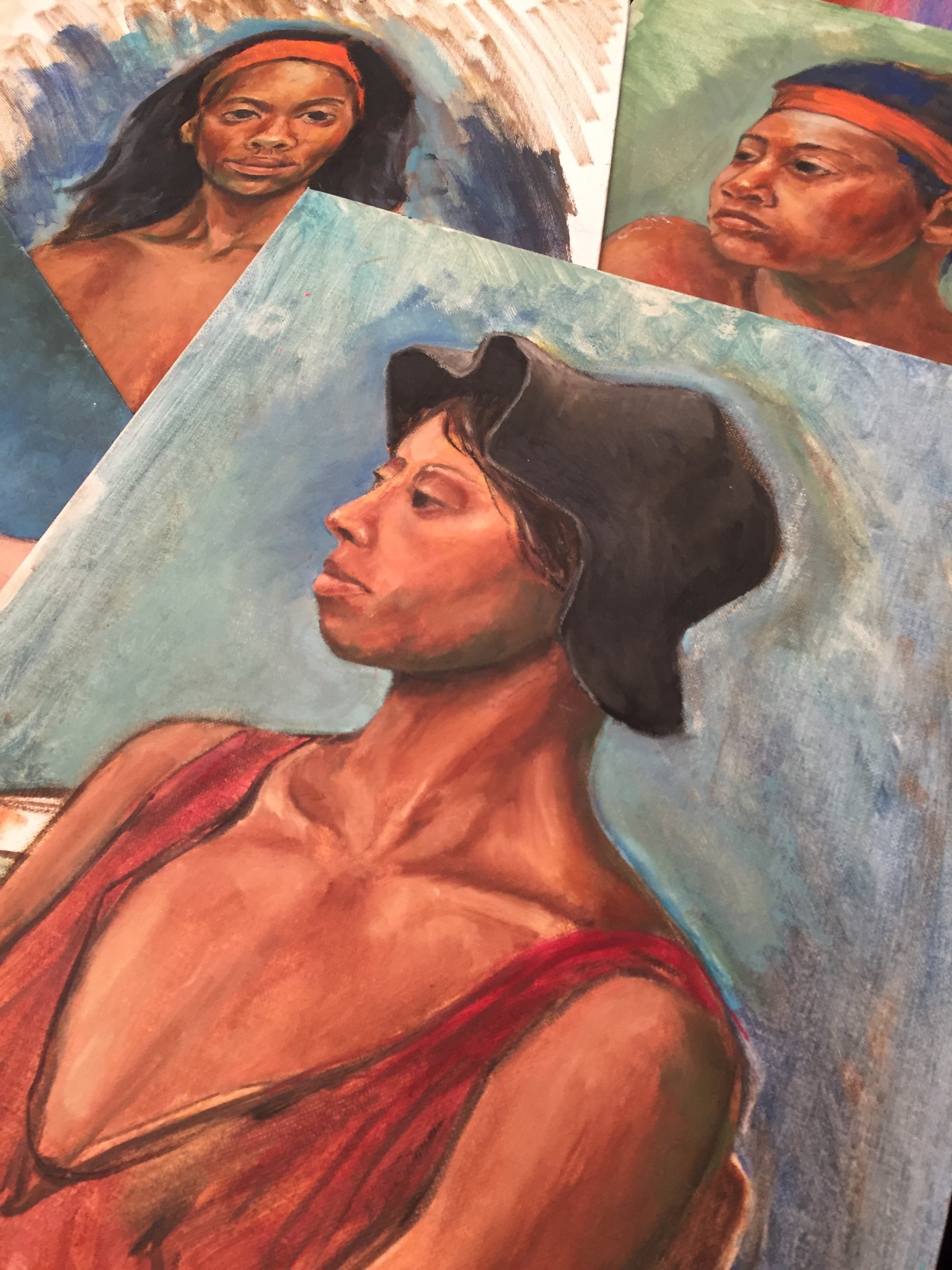
So in the spring of 1982, three or four days a week I took the “D Train” from Fordham Road down to Columbus Circle to take painting classes at the renown “Art Students League of New York.” Located on 57th Street, painters such as Thomas Hart Benton, Georgia O’Keeffe, Jackson Pollock and Mark Rothko all studied there. The place reeked of history and oil paint. I loved it. The classes were in portrait painting. I kept a few of the canvas boards from those months — proof that I could work in oil paint and that I once had the patience and skill to paint without making too much of a mess.

DSC_0050

The Art Students League of New York

IMG_0371IMG_0372


Two friends…

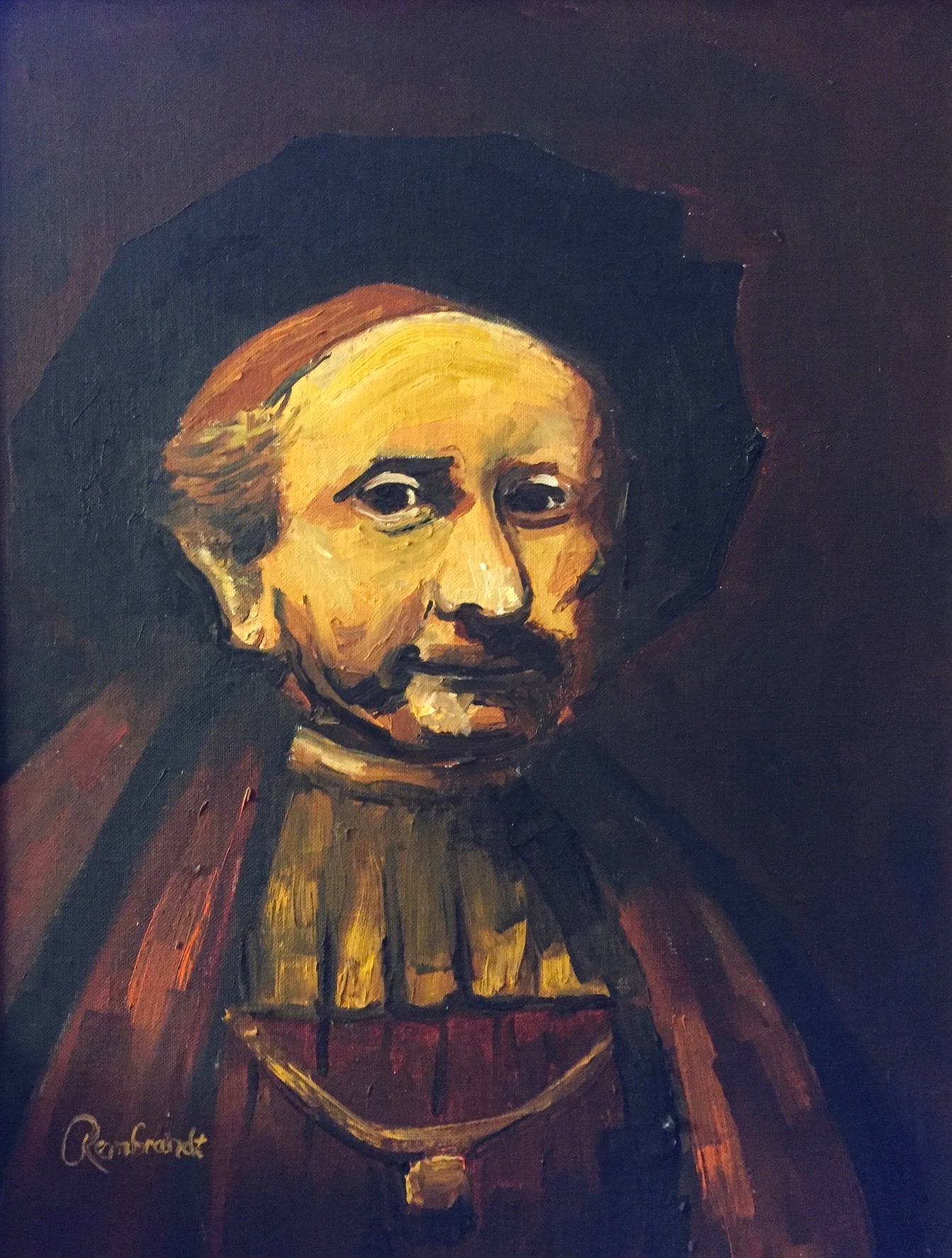
I did these two oil paintings when I was in high school. Two of my favorite (then…and still) painters. Vincent, especially has found a sacred place in my heart and soul. The best way to know God is to love many things…so he said. So I try.

rembrandtvincent

Banner for First Vows 1978

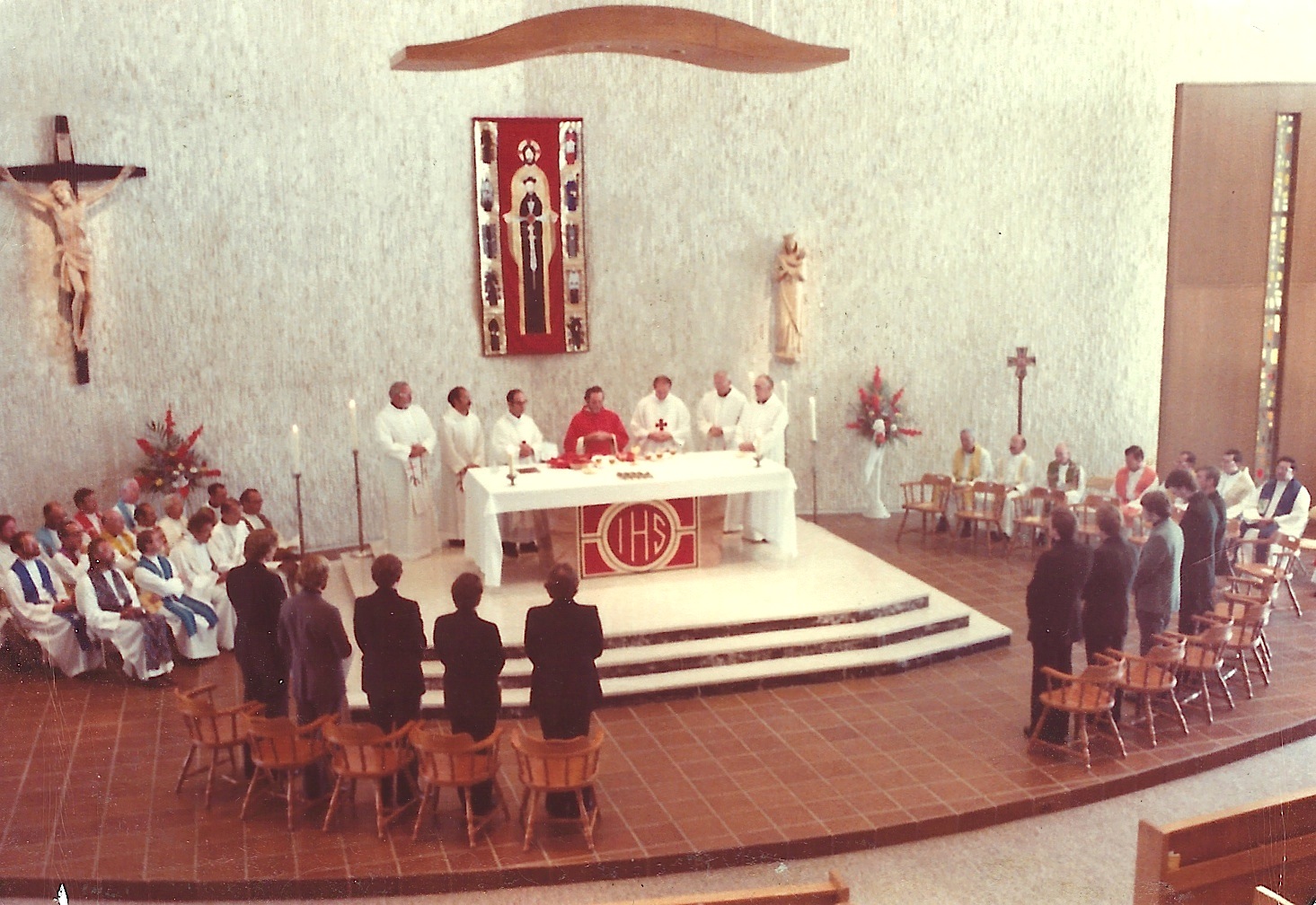
In August of 1978, I pronounced my first vows as a Jesuit in the chapel at the College of the Queen of Peace in Montecito, California. I created this banner for the occasion.

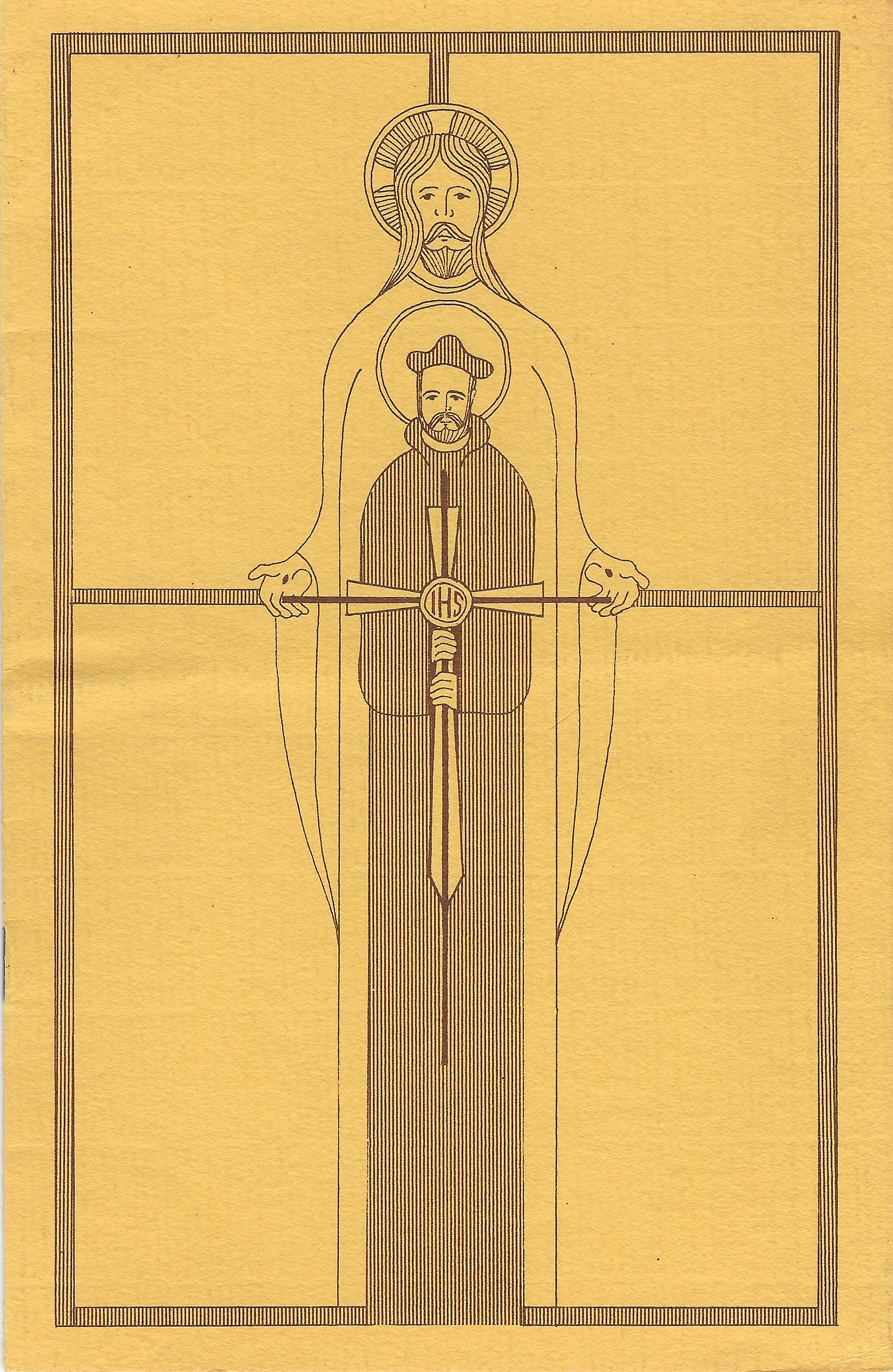
Jesus and Saint Ignatius are in the center — Jesus gently holding a cross that becomes the sword that Ignatius offers to Mary at Montserrat. Flanking this Holy duo are ten Jesuit saints: let’s see if I can remember who they are…On the right, from the top: Francis Xavier, John Francis Regis, Peter Claver, Peter Canisus and Gerard Manley Hopkins; on the left [I don’t recall for sure, but the bright red makes me think it’s Robert Bellarmine,] Edmund Campion, Alphonsus Rodriguez, Stanislaus Kostka [and hidden by the candle is, I think, Teihard de Chardin.]

The last time I saw this banner, it was rolled up in a closet somewhere at Loyola High. Then again, when I made this in 1978, I was rolled up in a closet as well. AMDG

vows august 1978 copy

Vow day, August 1978

Vow Banner 1978

Companions on the journey

vow program

Vow program cover