Angry Tom
In 2005, my Jesuit superiors became concerned about my drinking. I was sent to a treatment center in St. Louis for an evaluation of my relationship with alcohol. Just about every fiber of my being resisted what felt like an unwelcome intrusion into my private life. There was a signifiant amount of turbulence as my flight began its descent into the airport in St. Louis. I remember thinking to myself, “Tom, these planes were built for this.” And, “Tom, you are built for what awaits you.”
My solution was simple: I lied my way through the entire evaluation. Looking back on it, I am actually a bit horrified at how easily — and successful — I was at dancing around what were, as it turned out, the serious and significant issues I had with booze.
The whole adventure, meetings with doctors, therapists, and a priest who was supposed to evaluate my spiritual maturity after a 40 minute chat…all of it resulted in a lengthy report that was forwarded to my superiors — and a copy to me. While it was determined that I need not stay for treatment (I guess I lied really well) the report was about 30 pages of observations and suggestions as to how I should live my life.
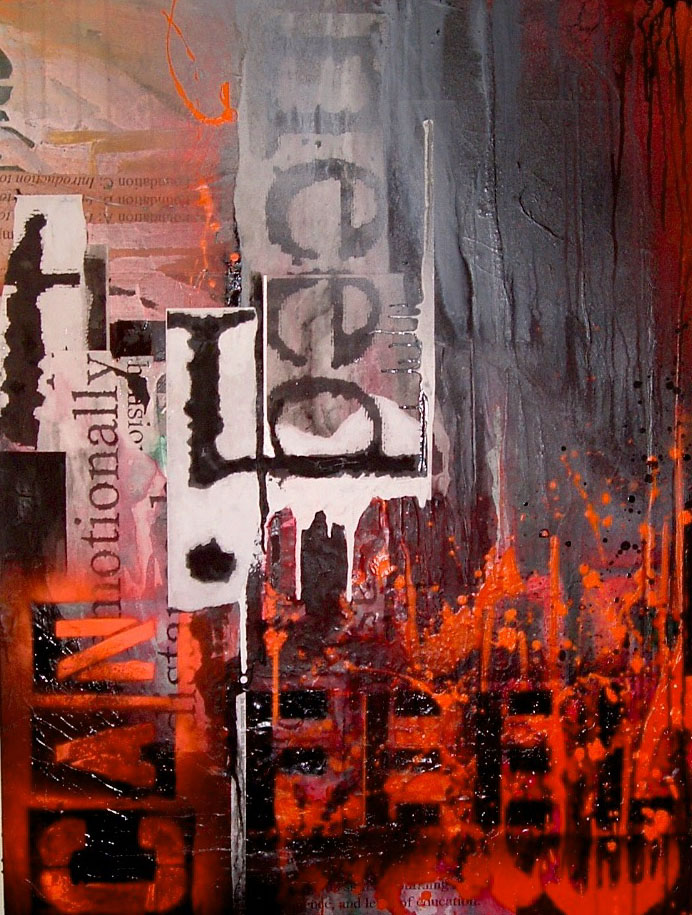
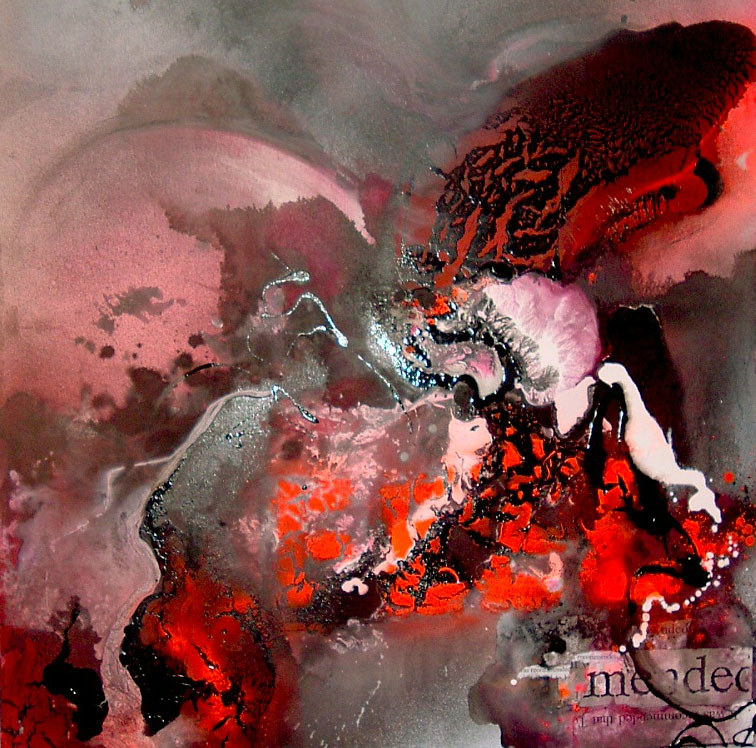
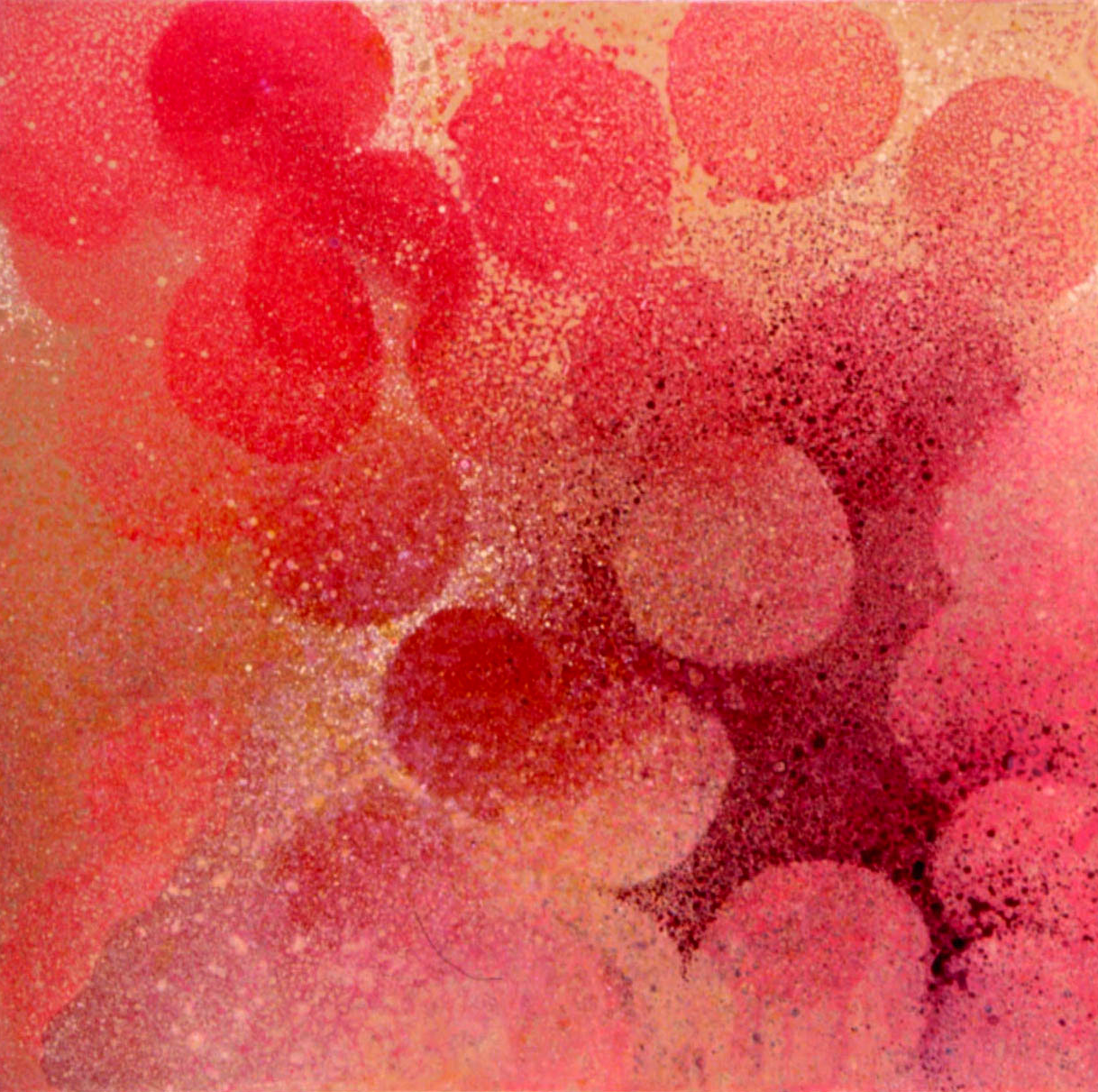
I never read it. When it appeared in my mailbox in a large manila envelope, I tore it apart — and with the help of a Xerox machine that enlarged the text — I began to collage fragments of the dissembled report into a series of very angry paintings. Using white gesso, black enamel and red, orange and pink fluorescent spray paint, I fashioned my own evaluation of the evaluation.
The good news was that people who saw these paintings were moved by their graphic honesty and emotion. The bad news was that it took another nine years for me to get sober.
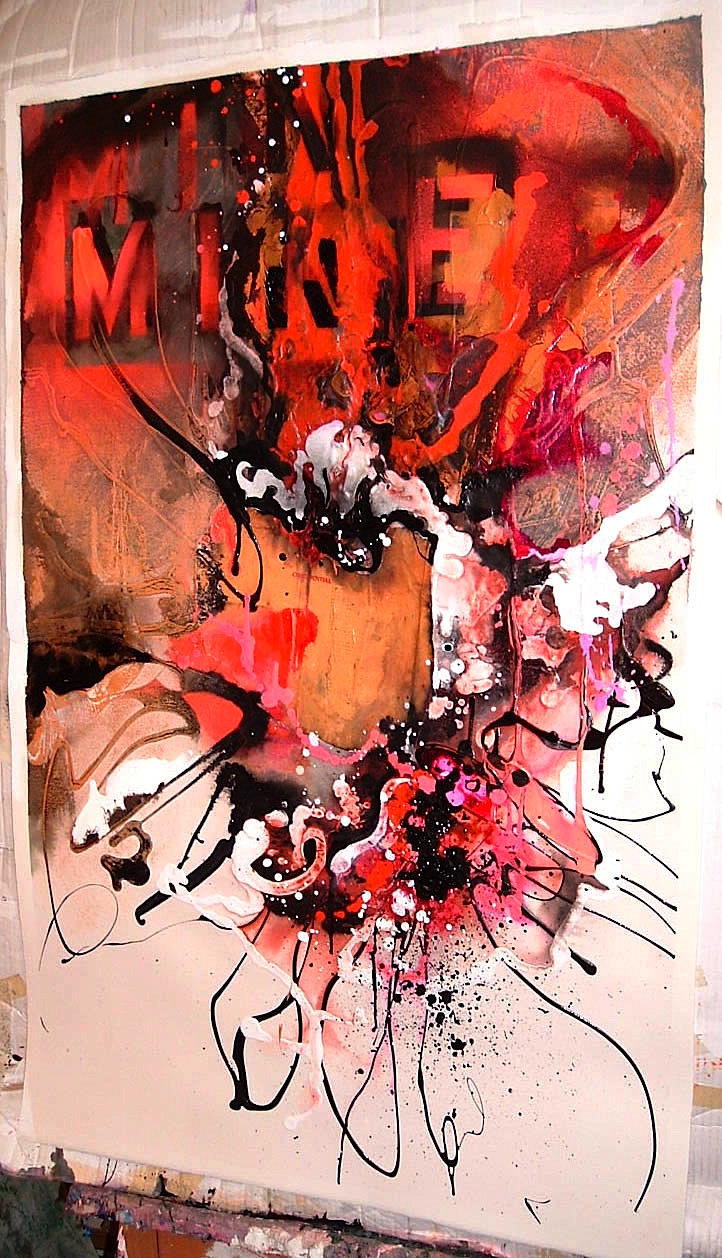
This was the first in the series. In the center of this large piece of watercolor paper is the manila envelope in which the report was sent. The word “Confidential” is stamped in red. Looking at it now, the white gesso and black enamel form a ghostly shape that is trying to claw back the report into my own possession. The splattered paint seems to have almost been spit upon the surface — and indication of my feelings about the whole experience. And if that wasn’t clear enough, the stenciled word, “MINE” not so subtly expressed my response to all of the questions and queries that had been made about my use and abuse of alcohol.

The other half of the manila envelope appears in this next painting, a 24-inch square canvas:
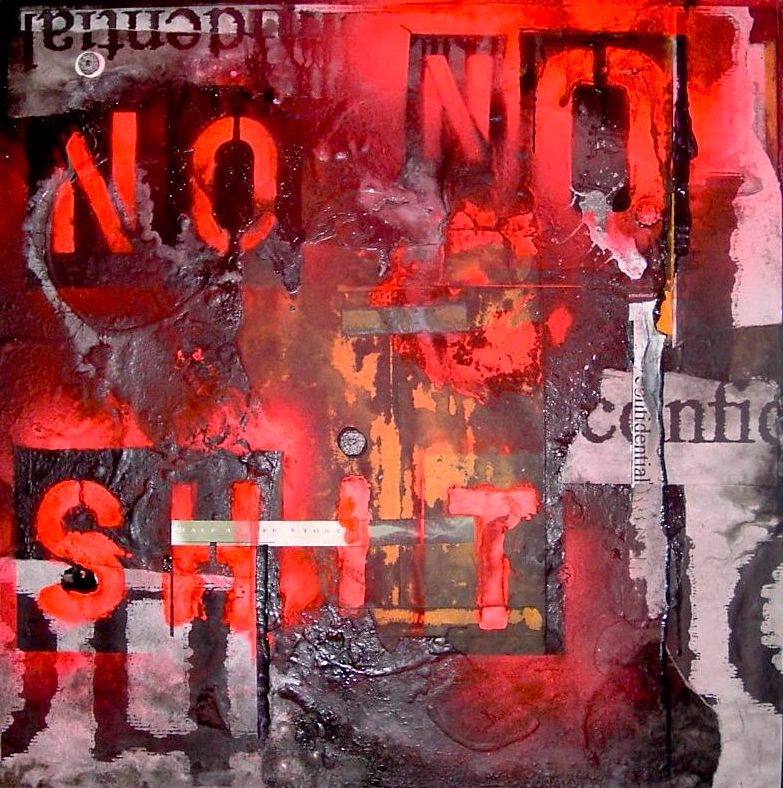
Again, I highlight the word “Confidential” — coped and enlarged over and over — and in dialogue with a (once again) not too subtle red fluorescent comment how I experienced confidentiality throughout the whole experience in St. Louis. Two additional elements to note: I added a couple of eucalyptus acorns (old friends that I had used in earlier, happier paintings) and part of the cover of a book, Becoming a Man: Half a Life Story, by Paul Monette. My brother Joe had sent me this book a few years before and Monette’s story had a huge impact on my life. While I don’t think I considered it at the time I made this piece, much of what I was seeking to protect throughout this experience — vulnerable, tender and honest parts of myself — were beautifully expressed in his “half a life story.”
Another 24-inch square painting done around the same time, sadly, no longer exists. It was destroyed in a fire several years ago. I am grateful to have a photo of it, even if the quality is rather poor.
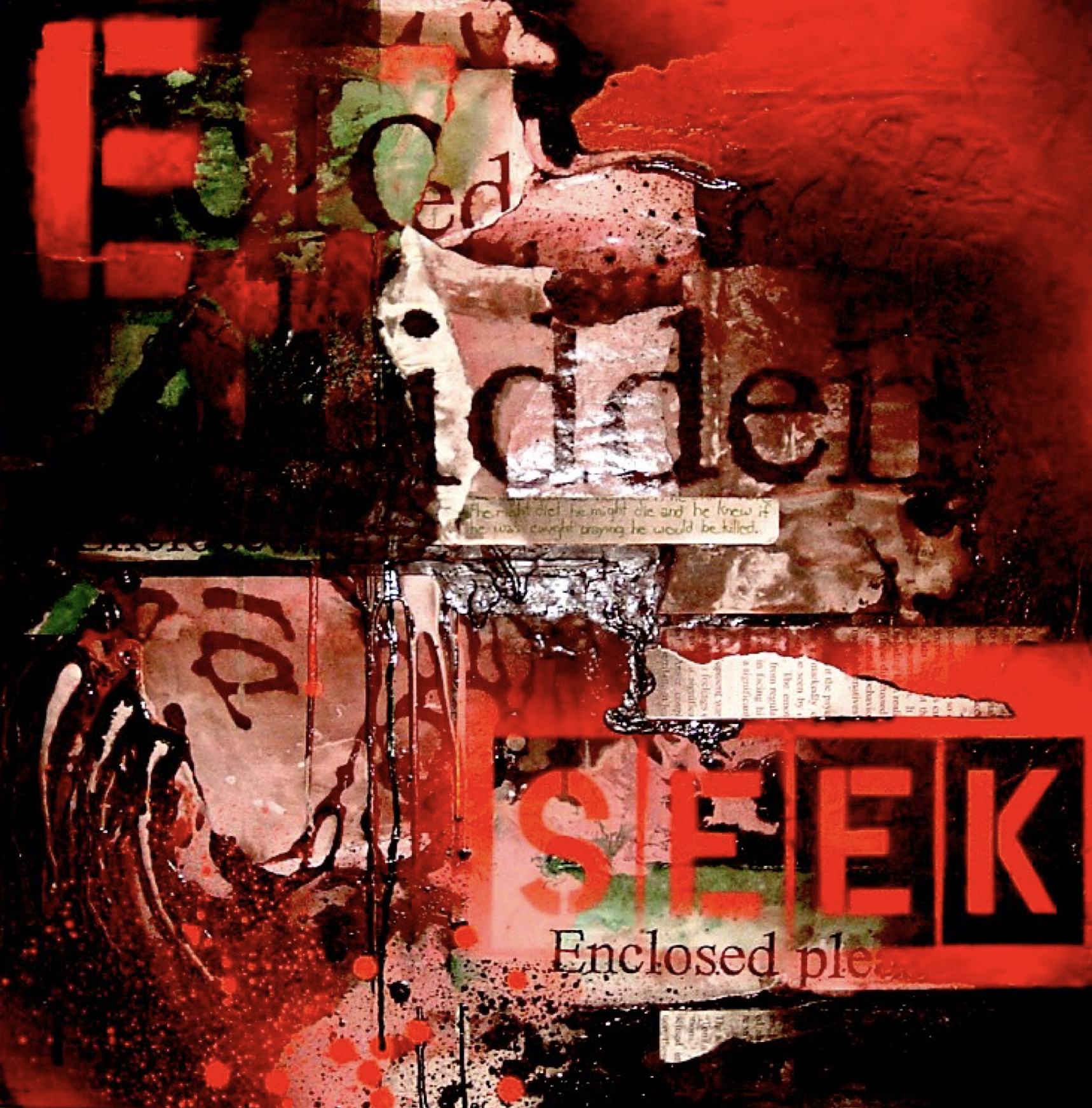
Here, I used the copied and enlarged text from the report, gesso, enamel and spray paint along with an enlarged image of a face copied from a medieval manuscript. The face is being “hushed” by a hand made up of gesso and enamel. In the center is a small piece torn from a 6th grade religion project. A tender Tommy, way back then, had been given an assignment to create a little booklet about the Prophets of the Old Testament. A fragment from that grammar school report, written in green marker on binder paper is placed at the very center of this painting. It reads, “…he knew if he were caught praying he would be killed.” Some forty years later that is exactly I how felt sitting in the waiting room in the treatment center before my first interview.
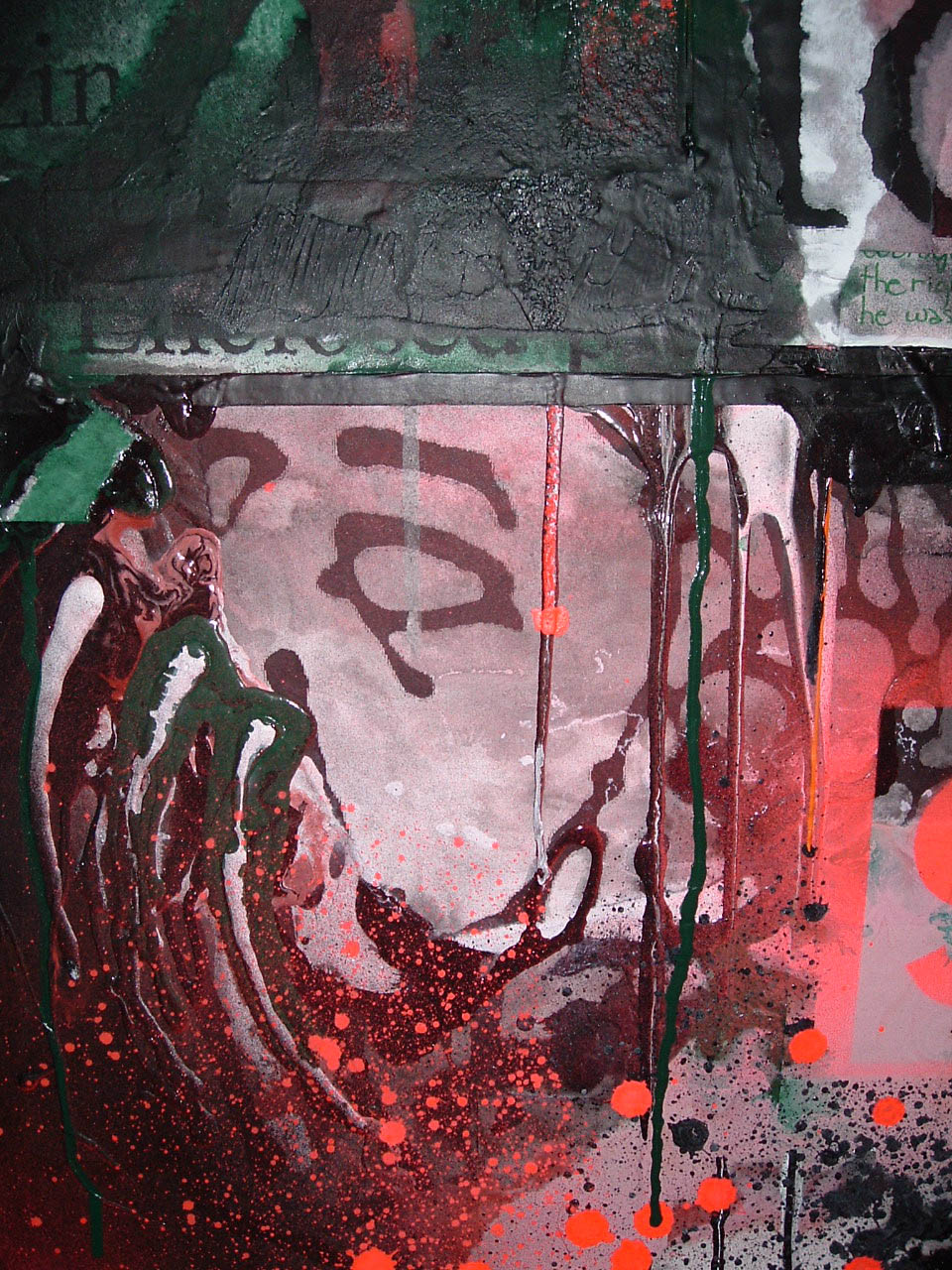

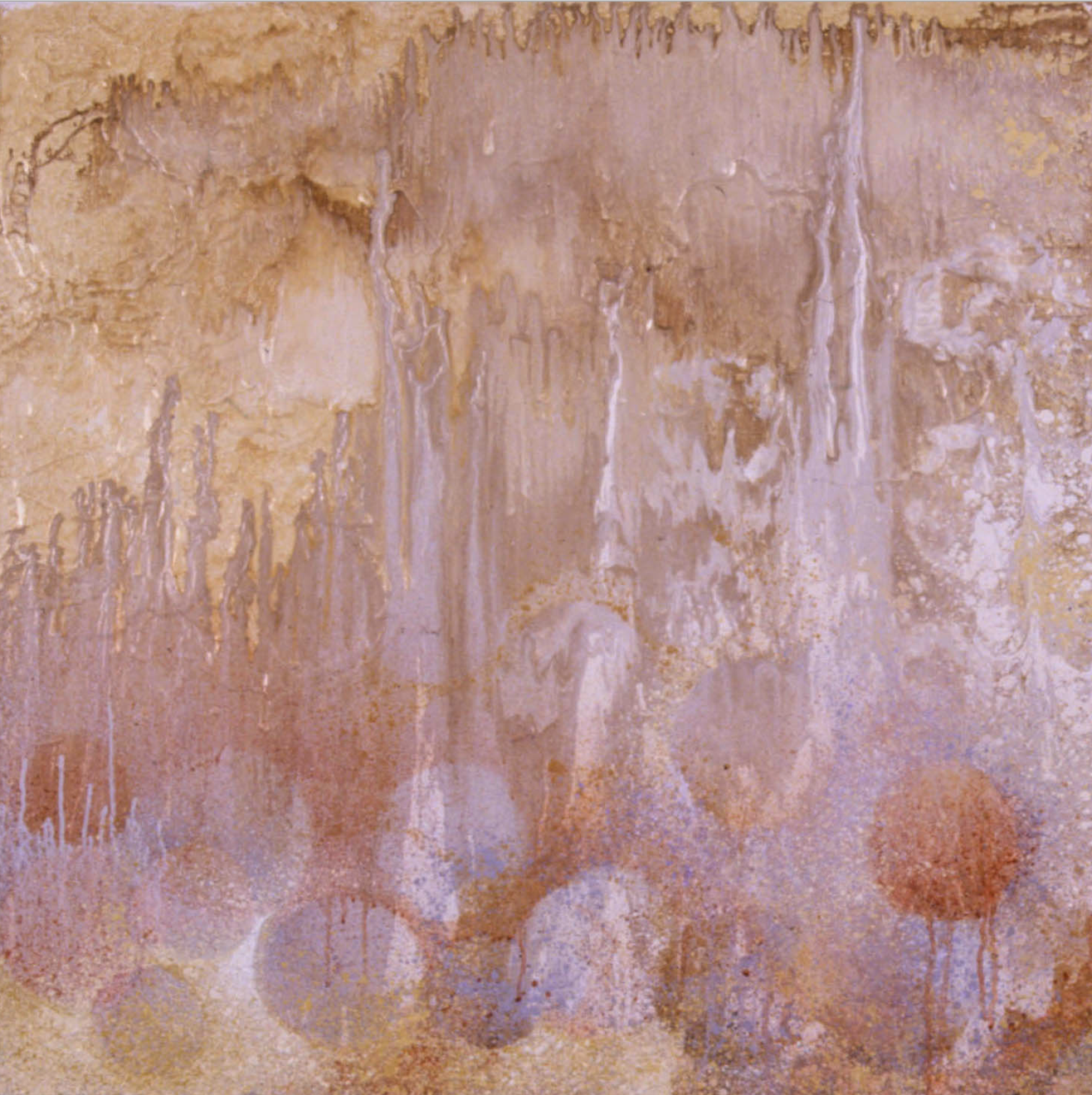
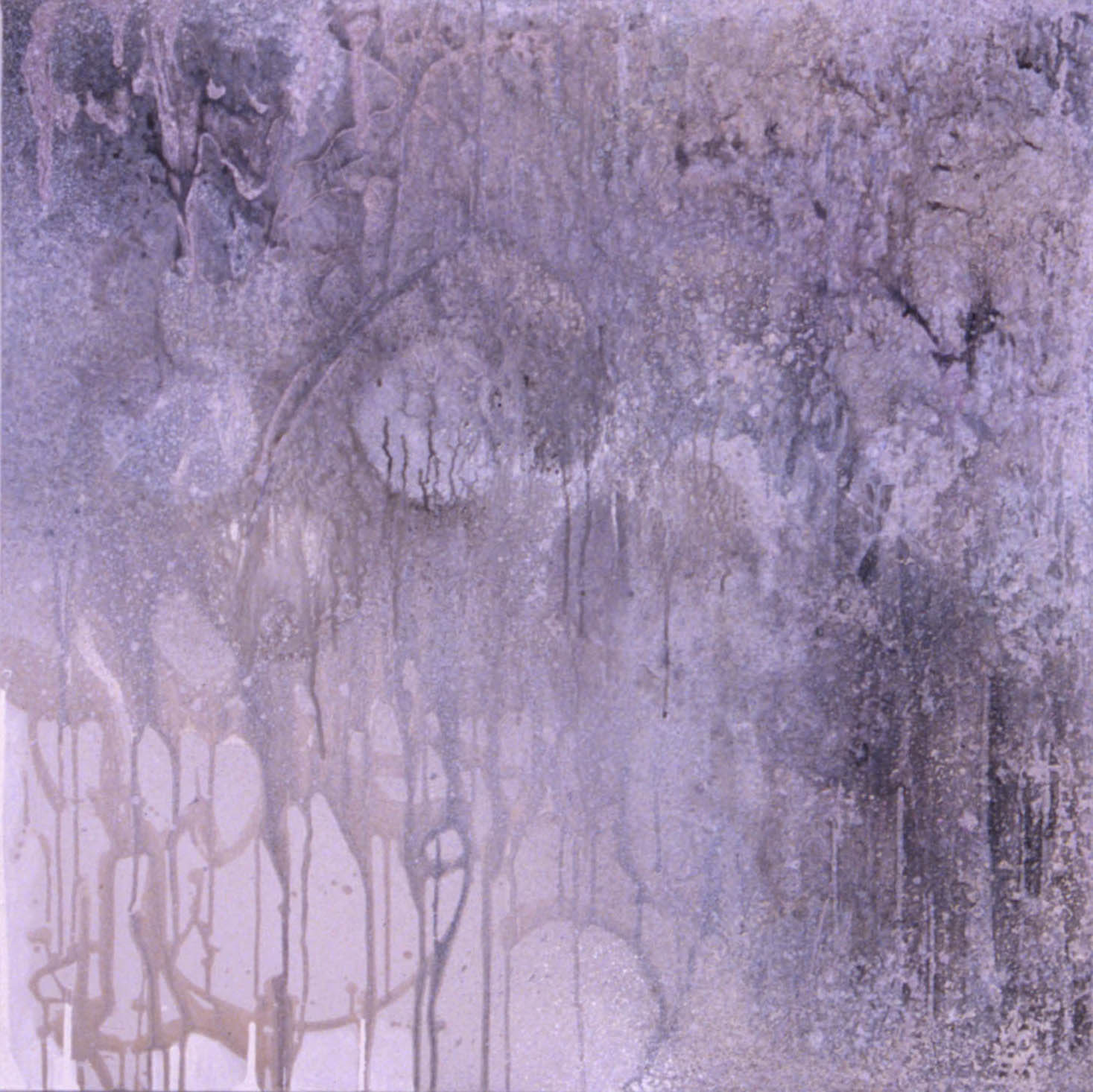
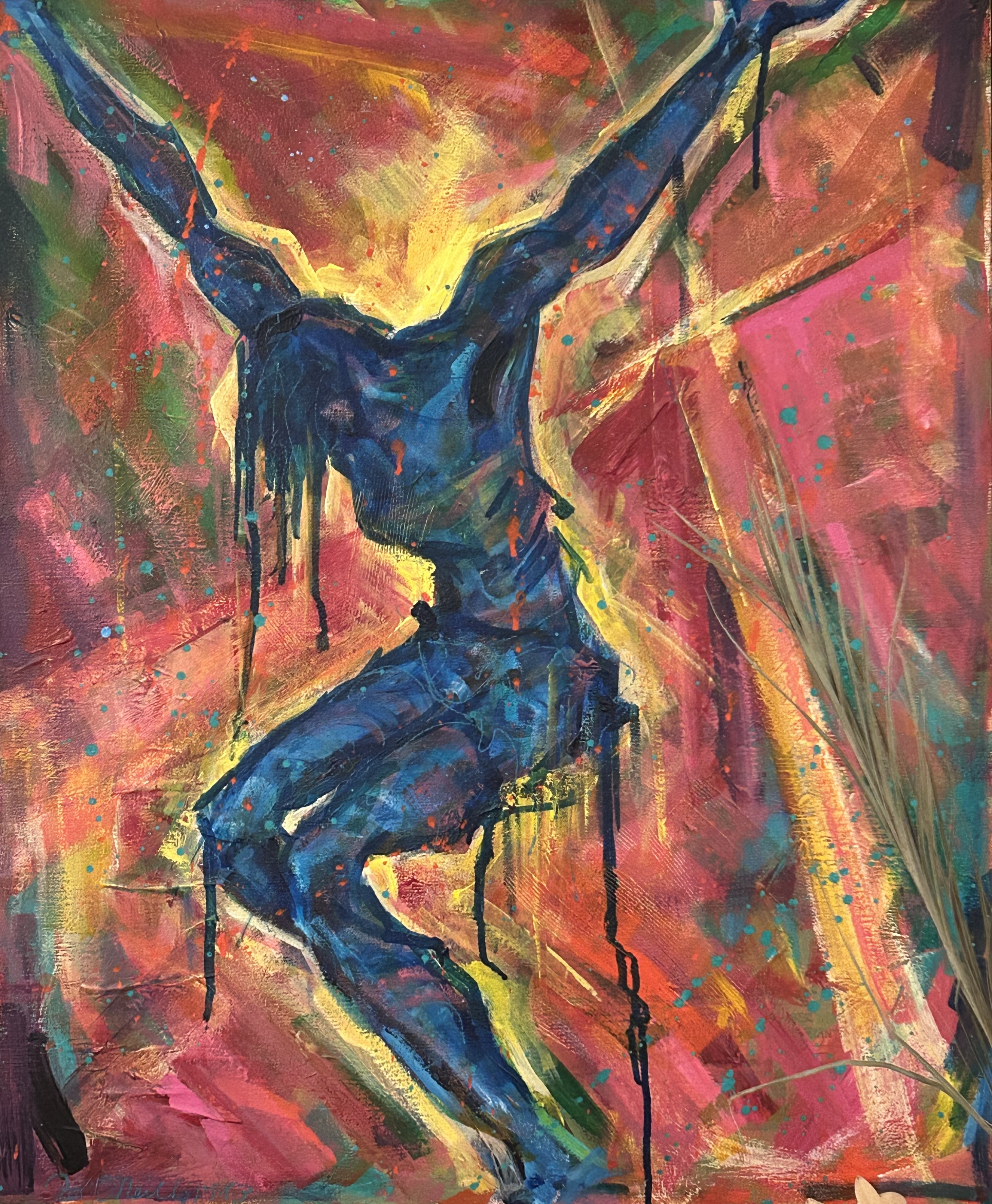
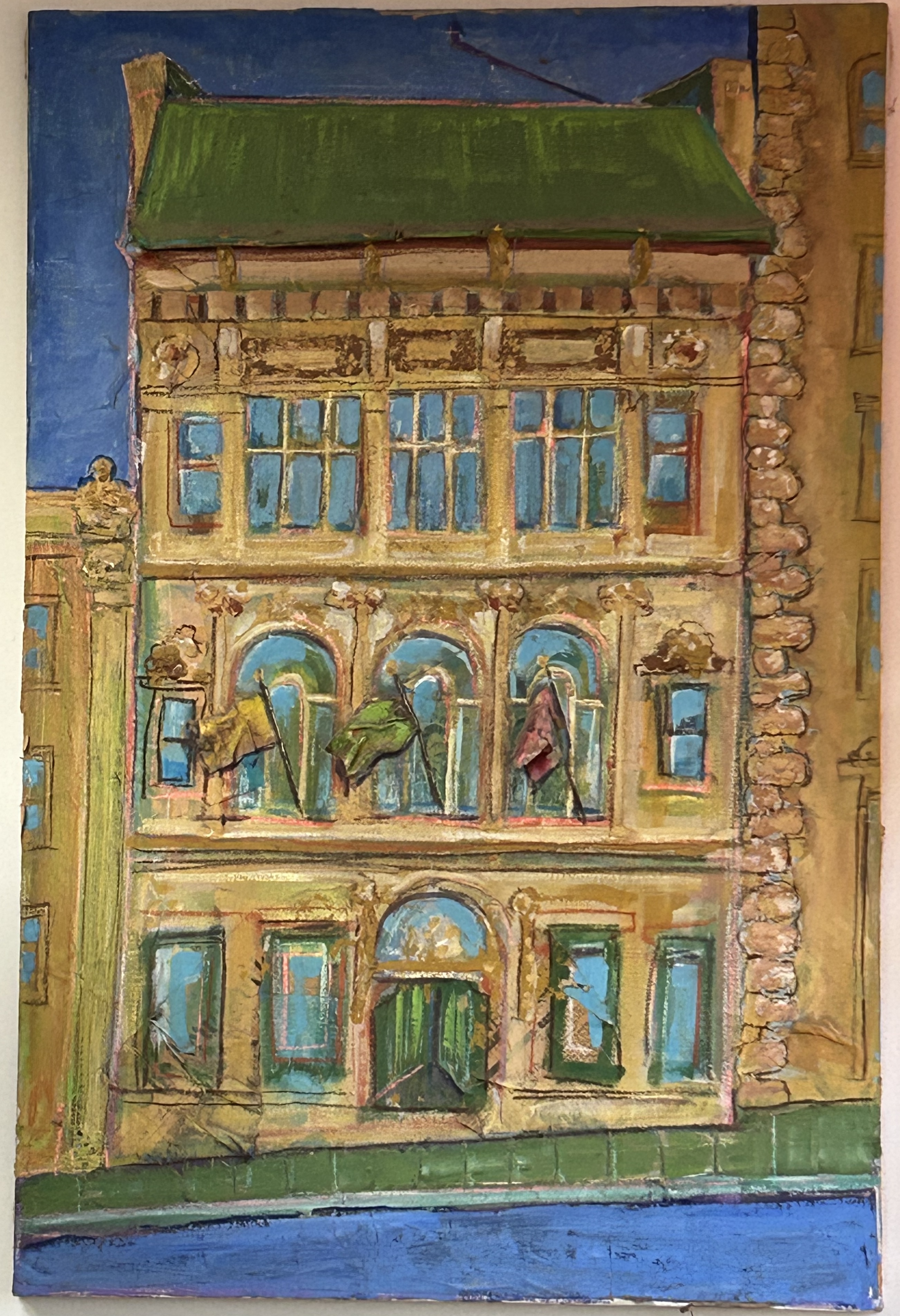
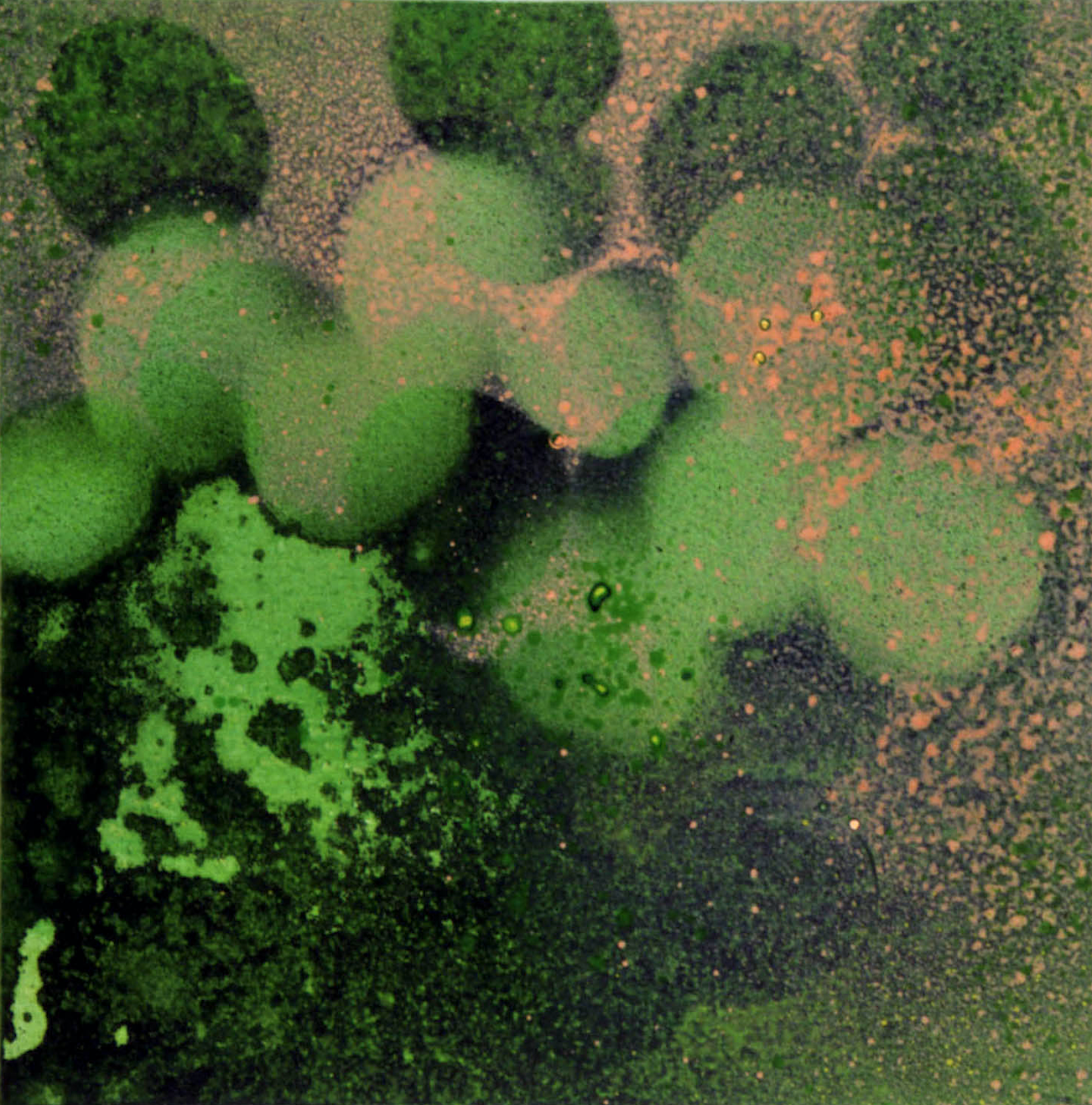
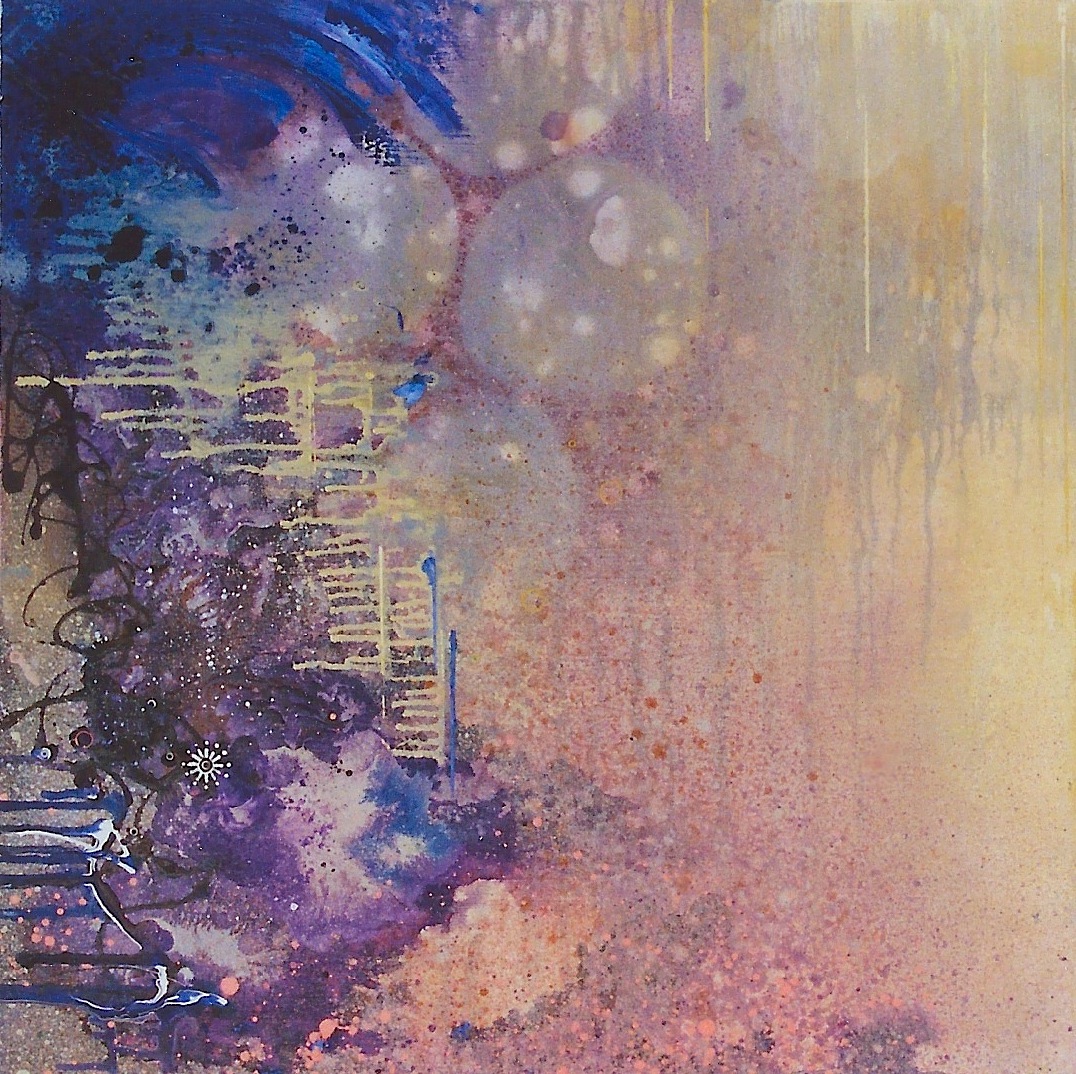
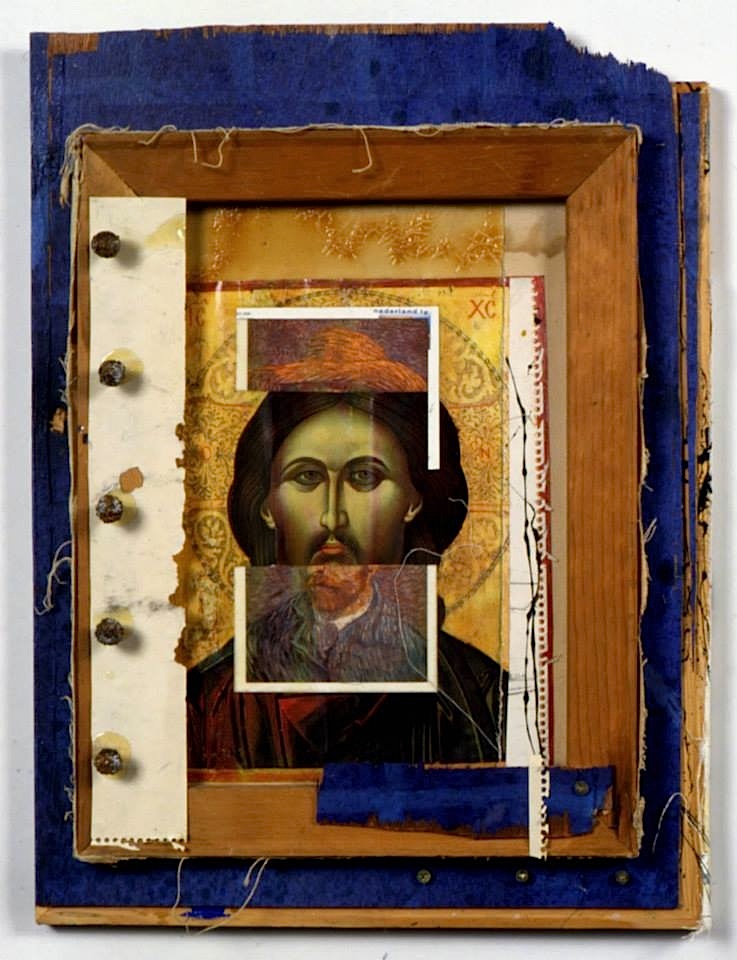
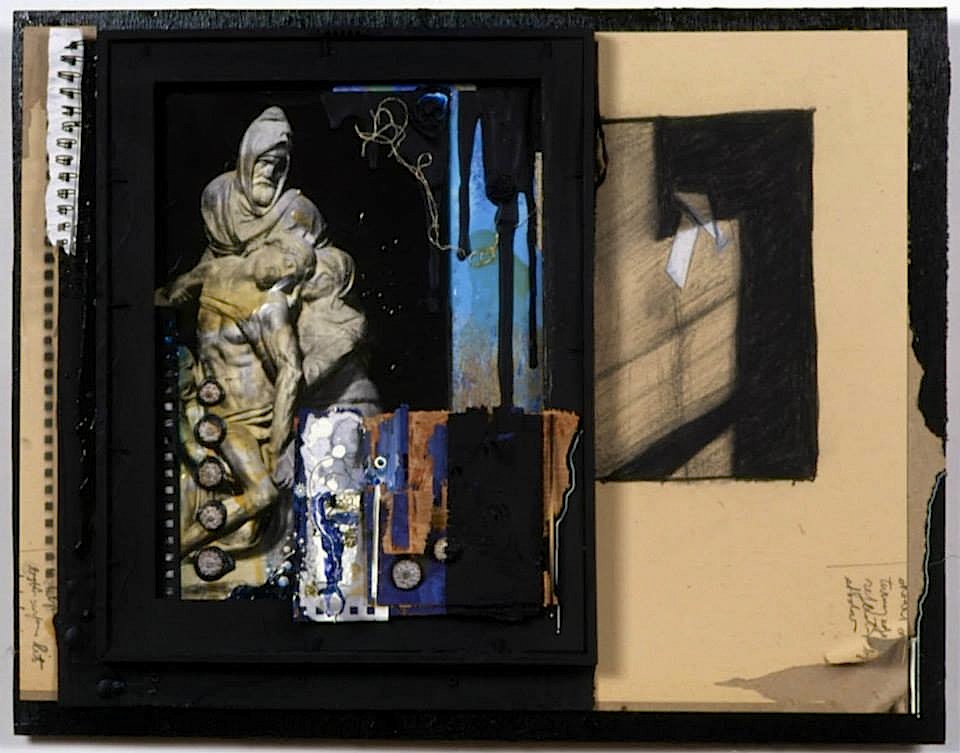
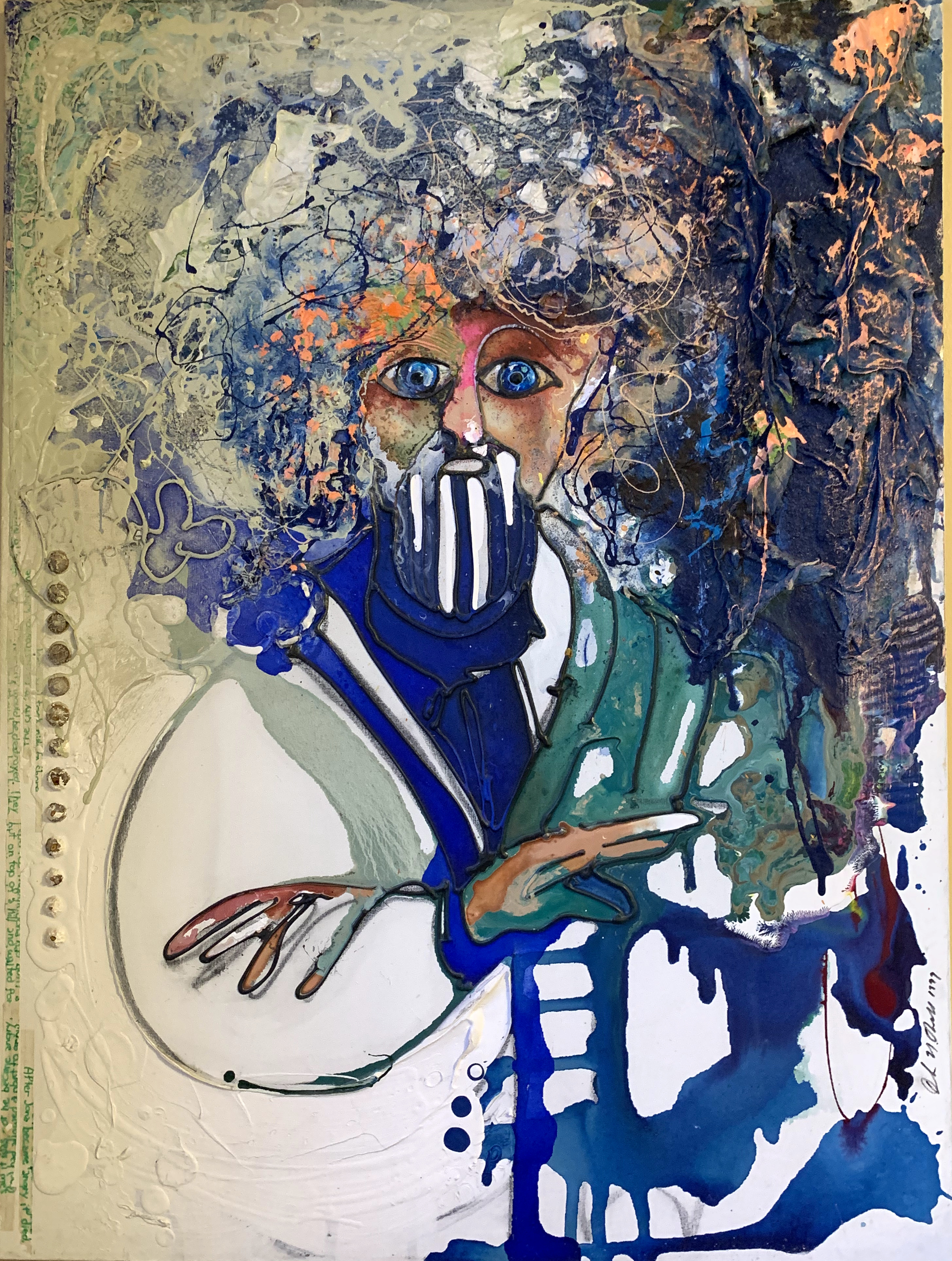
Some other painting from this series:



















 tommyosj