I loved teaching. For many years, I was blessed to be in a trusted place to mentor young men, help them discover and develop their talents — and to grow to appreciate and value themselves. Three times in my life as an artist I have been blessed with men who have done that same thing for me. The first was Franklyn in Los Angeles. The second was my thesis director at Pratt, Ross Neher.
I first met Ross when I took his Drawing Seminar in my first semester at Pratt — life drawing from a model twice a week. Ross would position the model in her/his pose and we would begin to draw. He sat back and read the Wall Street Journal. A couple of times during the class, Ross would walk around and comment on our work. He was honest and direct. He was not warm and fuzzy.
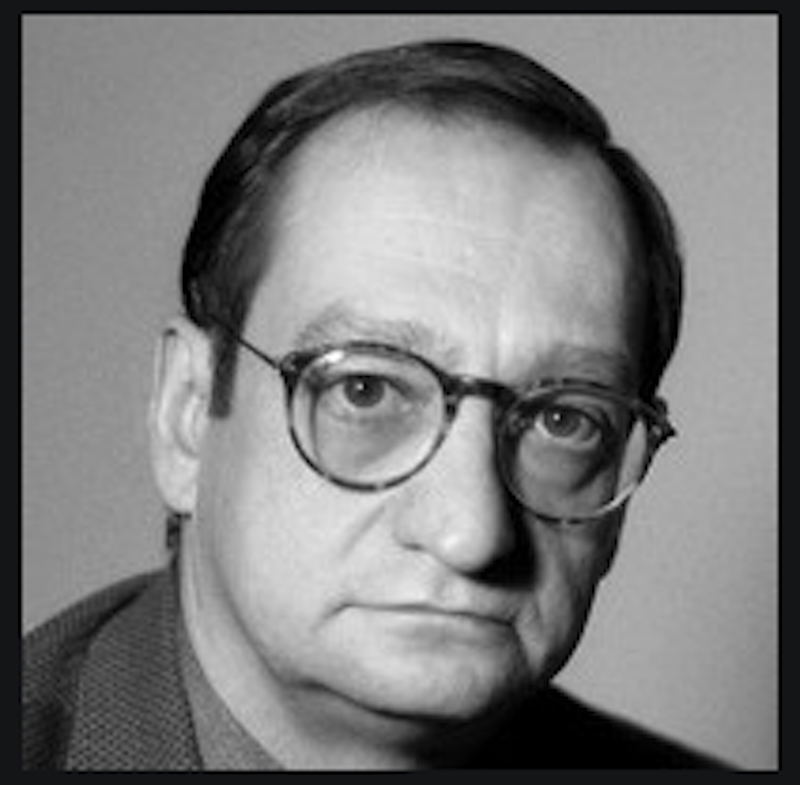
That same semester I took a painting class from a very kind and gentle man named Jerry Hayes. One day, Jerry came by my studio to see what I was working on. I was still playing with pita bread and gluing wire and other objects to canvases. I was completely lost and uncertain of what I was doing. And, as ever, wondering what I was doing trying to get an M.F.A. Jerry examined one of the pita-bread painting/assemblages that I’d brought from Los Angeles. He asked me, “Do you know Ross Neher?” I said I did, that I was taking him for a drawing course that semester. “Has he seen your work?” I said that no, he hadn’t. Jerry then assured me, “Well, he’d really hate it.”
Well, I wanted to find out what Ross really would think so I asked him to come by my studio. And Jerry was right: Ross really hated what I was doing with my painting/assemblages with pita bread, paint can lids and sticks. His response was not ambiguous.
One of the good things about being 40 rather than 20 beginning graduate school was that over the years I had accumulated enough bruises and scars to my ego that I could (not easily, mind you) accept criticism. I sensed that Ross was a man of substance and integrity — and that his opinion mattered. That he had something to say. So I asked him to explain his response. In fact, I would eventually ask him to be my Thesis director.
As I would come to learn, Ross was something of a purist when it came to painting. A painting should be made out of paint. Collage, assemblage, new forms etc., etc. — they might all be something and might have their own value as art in their own way (I doubt that Ross believed that) — but of one thing Ross was certain: they are not painting. If I wanted to be a painter, in his eyes, I should use paint. Period.
I came to respect his integrity and clarity. I began to appreciate that Ross was honoring a tradition that dated back centuries. A tradition that was under assault by all sort of new technologies and new forms — and by the popular notion that “painting was dead.” For Ross, it wasn’t. It was a discipline that demanded respect. And that respect is what Ross demanded of me…when he advised me of how much he hated what I had been doing with paint, pita bread, glue, wires and all sorts of other extraneous objects.
But there was something more: in his honesty and directness, he was taking me seriously as a painter. And calling me to do something more serious. To be something more serious. And he knew, I think, that as a Jesuit priest, I knew something about the value and values of a tradition. Consciously or unconsciously, he was challenging me.
I am grateful I was able to accept the challenge. And learn. Even in my 40’s.
 tommyosj