Another Mentor

I loved teaching. For many years, I was blessed to be in a trusted place to mentor young men, help them discover and develop their talents — and to grow to appreciate and value themselves. Three times in my life as an artist I have been blessed with men who have done that same thing for me. The first was Franklyn in Los Angeles. The second was my thesis director at Pratt, Ross Neher.

I first met Ross when I took his Drawing Seminar in my first semester at Pratt — life drawing from a model twice a week. Ross would position the model in her/his pose and we would begin to draw. He sat back and read the Wall Street Journal. A couple of times during the class, Ross would walk around and comment on our work. He was honest and direct. He was not warm and fuzzy.
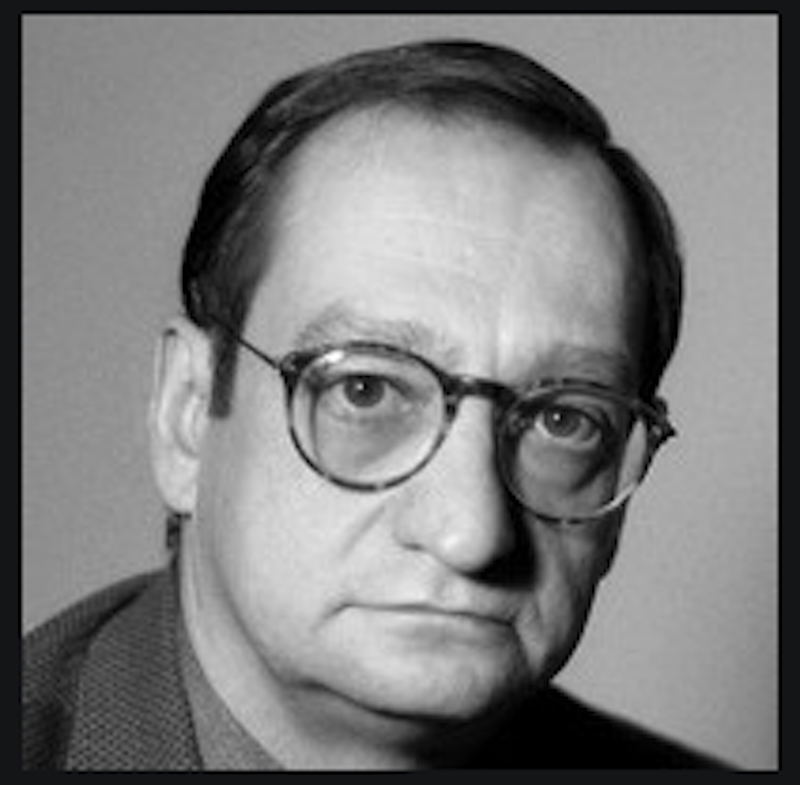
Ross Neher

That same semester I took a painting class from a very kind and gentle man named Jerry Hayes. One day, Jerry came by my studio to see what I was working on. I was still playing with pita bread and gluing wire and other objects to canvases. I was completely lost and uncertain of what I was doing. And, as ever, wondering what I was doing trying to get an M.F.A. Jerry examined one of the pita-bread painting/assemblages that I’d brought from Los Angeles. He asked me, “Do you know Ross Neher?” I said I did, that I was taking him for a drawing course that semester. “Has he seen your work?” I said that no, he hadn’t. Jerry then assured me, “Well, he’d really hate it.”

Well, I wanted to find out what Ross really would think so I asked him to come by my studio. And Jerry was right: Ross really hated what I was doing with my painting/assemblages with pita bread, paint can lids and sticks. His response was not ambiguous.

One of the good things about being 40 rather than 20 beginning graduate school was that over the years I had accumulated enough bruises and scars to my ego that I could (not easily, mind you) accept criticism. I sensed that Ross was a man of substance and integrity — and that his opinion mattered. That he had something to say. So I asked him to explain his response. In fact, I would eventually ask him to be my Thesis director.

As I would come to learn, Ross was something of a purist when it came to painting. A painting should be made out of paint. Collage, assemblage, new forms etc., etc. — they might all be something and might have their own value as art in their own way (I doubt that Ross believed that) — but of one thing Ross was certain: they are not painting. If I wanted to be a painter, in his eyes, I should use paint. Period.

I came to respect his integrity and clarity. I began to appreciate that Ross was honoring a tradition that dated back centuries. A tradition that was under assault by all sort of new technologies and new forms — and by the popular notion that “painting was dead.” For Ross, it wasn’t. It was a discipline that demanded respect. And that respect is what Ross demanded of me…when he advised me of how much he hated what I had been doing with paint, pita bread, glue, wires and all sorts of other extraneous objects.

But there was something more: in his honesty and directness, he was taking me seriously as a painter. And calling me to do something more serious. To be something more serious. And he knew, I think, that as a Jesuit priest, I knew something about the value and values of a tradition. Consciously or unconsciously, he was challenging me.

I am grateful I was able to accept the challenge. And learn. Even in my 40’s.
Pratt

I don’t cry easily. That doesn’t mean I’m not emotional. Just that I’m Irish. The drive across country was a wonderful experience. I enjoy solitude — and Interstate 70 offered me miles upon miles of it. As each mile receded behind me, I was leaving a well formed and comfortable image of Tom O’Neill. “Fr. Tom”: every 17 year old boy’s favorite Jesuit at Loyola High. It was true. And it was killing me.

Something new awaited me in New York. I wasn’t afraid of being on the other side of the desk again. School was something I knew how to do. But…

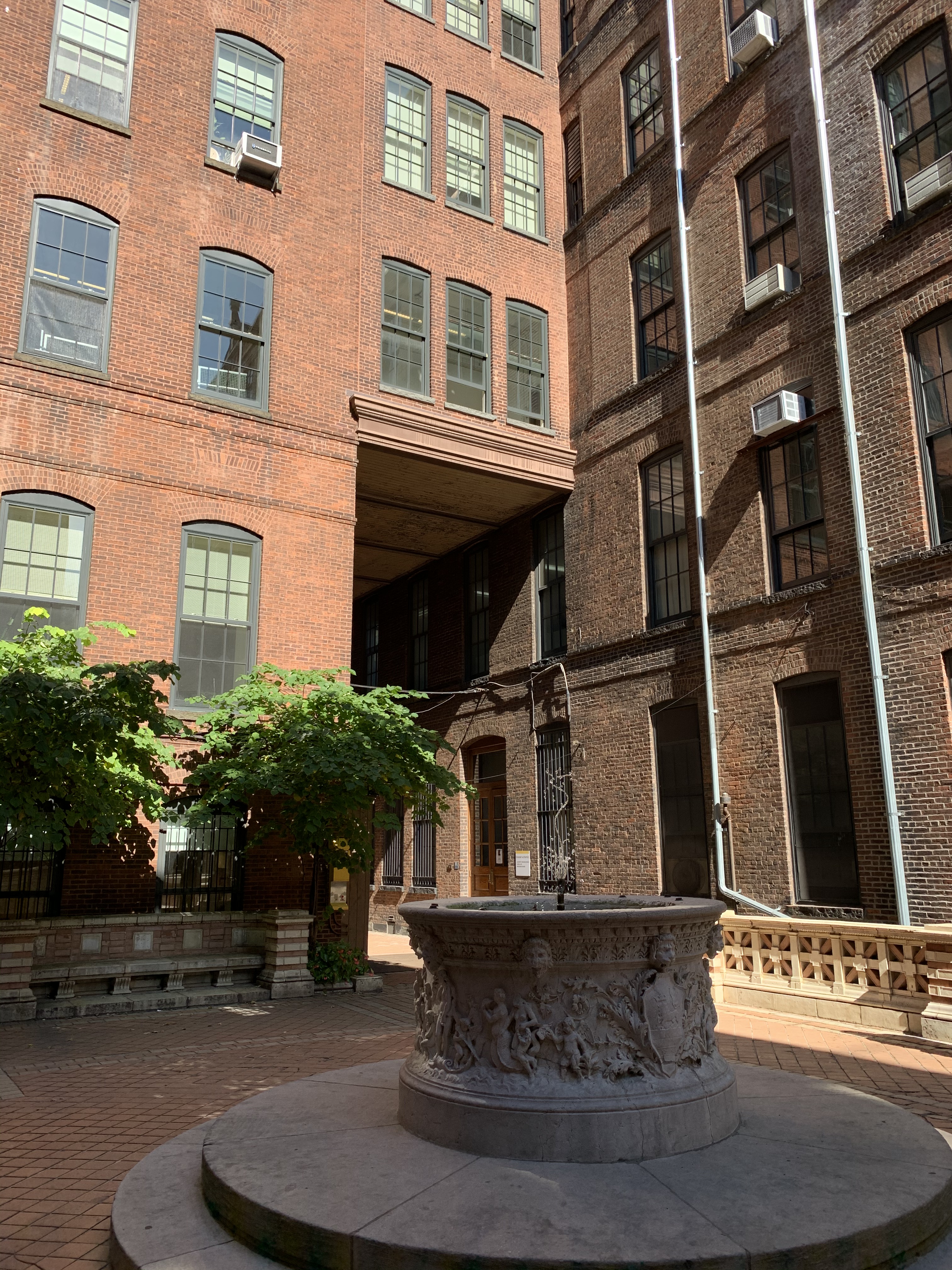
When I got to Pratt I was assigned a studio space in Steuben Hall. It turned out to be a large cubicle formed by four freshly painted white walls. The floor was covered and splattered with several years of paint. The traces of previous painter-pilgrims who had passed through the same halls and walls.

I began to unpack boxes of paint and supplies. Carried up several blank canvases that would soon be…well, something. But I had no idea what, just yet. Then I stopped and looked around. And broke into tears.

What was a doing here? I had no business being here. I was a fraud. It didn’t help that pretty much everyone who I met in my first days at Pratt were in their 20’s and full of energy, confidence and ready to take on the world. They were also freshly out of their undergraduate Fine Art programs and were well groomed and well honed in the latest verbiage and jargon of the art world. They were the gnostics who spoke a language of art in the new 21st Century — a language that was a mystery to me.

I was twice their age. I was teaching kids like them just two years ago. Put me behind a podium in front of 30 sophomores, and I’m an expert. A star.

Put me alone in my studio in Brooklyn. I’m a mess. And my tears confirmed it.

Back to New York

It was my friend Tom McCormick who urged me to pursue an M.F.A. in painting. Tom was always the loving guardian angel on my shoulder, seeing my gifts, encouraging my dreams and loving me as I was. And am. Here is a photo taken at the good-bye party given my by friends when I left Loyola High to begin the pilgrimage to Brooklyn. It’s my favorite photo of Tom and Tom.

My beard is now getting white too. There are worse people to become. Tom went home to God way too soon. I miss him deeply.

Sometime in August of 2000, I packed up my life in a UHaul truck and headed east. Rather than ship things to New York, I decided to drive. I always wanted to drive across the US, and this was a chance to do so. But even more, this move was not just a move, it was a deeply felt step on a pilgrimage. I emphatically needed to see Loyola High School in the rear view mirror. Not because I didn’t love my time there. In fact, just the opposite — I loved it too much. Or too small a part of me loved it too much.

The M.F.A. was not about adding initials to my pedigree, but about allowing hidden and neglected parts of me, of my soul, to step out into the light. How that was going to happen, I wasn’t sure about. But in order for that to happen, I had to say good-bye to 1901 Venice Boulevard and Rooms 313 and 901. AMDG.

My UHaul truck that carried me safe and sound from Los Angeles to New York (via my brother Joe’s home in Maryland.)

So, after spending a year taking classes at Art Center in Pasadena, Otis College of Art and Design in L.A. and a couple of classes at U.C.L.A. extension, I had built up enough of a portfolio to apply to M.F.A. programs. I had no idea what I was doing — so I picked programs in cities that I thought it would be fun to live in.

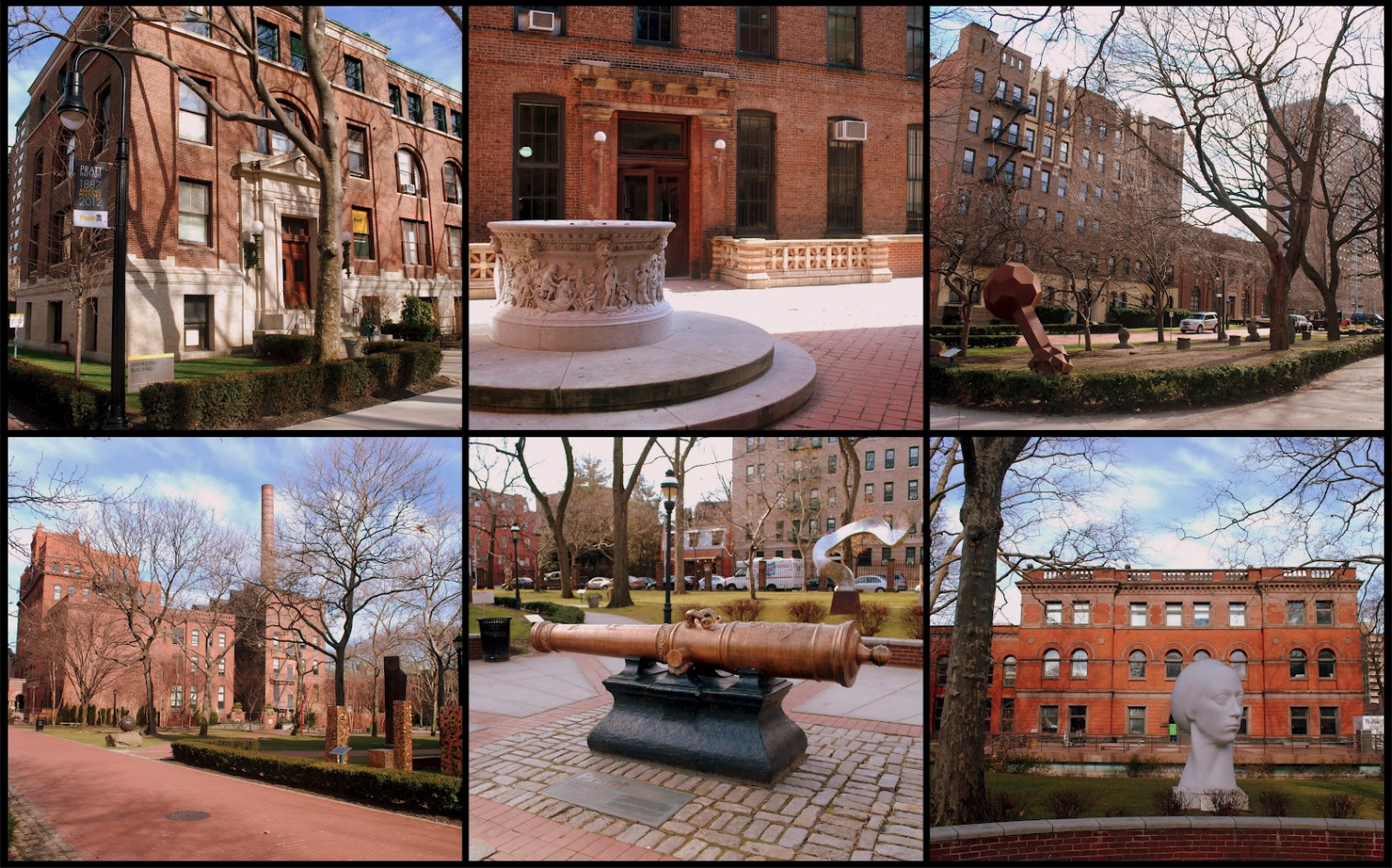
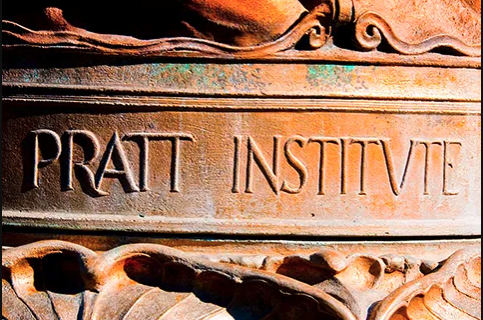
Entrance to Pratt Institute, Brooklyn, New York

On March 11, 2000, my 44th birthday, I received 8 rejection letters in the same mail delivery. Ouch. For over 10 years, as every boys’ favorite priest at Loyola High, I had counseled and consoled many a young man that his rejection from Stanford or Yale or whatever was simply part of God’s plan and that he would end up where God wanted him in the end.

Well, rejection sucks. So figured that graduate work in Fine Art just wasn’t part of the plan. Until the first week of May. One morning, a large manila envelop appeared in my mailbox: “Congratulations…” Not only was I accepted into an M.F.A. program, but it was to be in the greatest city on earth. New York.

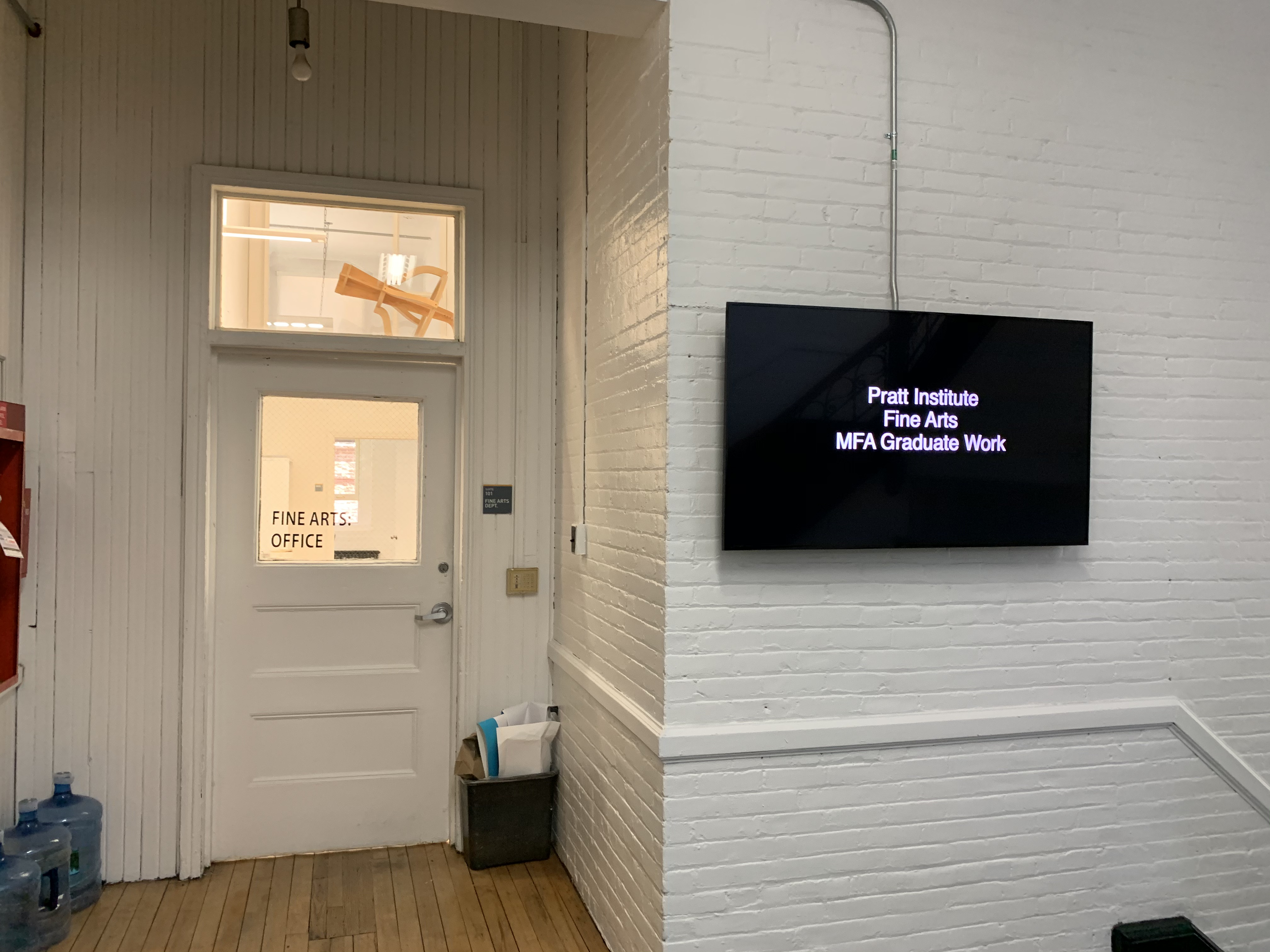
The Fine Arts Office

This was to be home for the next two years.